Hey there, if you’ve ever flicked a light switch and had it suddenly die mid-load, or seen a weird spark when you plug in a space heater and an old laptop at the same time, you’ve probably been saved by a circuit breaker—and didn’t even know it. I’ve been in the circuit breaker game for over 12 years now, sourcing, testing, and shipping these things all over the place, and let me tell you, most folks treat them like that random box in the basement they never look at… until something goes wrong. Today I want to break down exactly what these little workhorses do, why they’re non-negotiable for every home, shop, and even industrial space I supply for, and how they’re way more clever than you think. Circuit Breakers
First, let’s get the super basics out of the way. Your electrical panel (that gray metal box most people hide in a closet or basement) is basically the central control station for all the power in your space. Every outlet, light fixture, appliance, and HVAC unit gets its own circuit, right? And each of those circuits can only handle so much electricity—we measure that in amps, usually 15 or 20 amp for regular outlets, 30 amp for dryers, 50 amp for stoves, stuff like that. Too much power on one circuit is called an overload, and that’s where fire hazards start. Like, if you plug a 1,500-watt space heater, a 1,000-watt microwave, and a 700-watt air fryer into the same bedroom outlet, that’s 3,200 watts total. On a standard 15 amp circuit, that’s pushing way past the limit—15 amps times 120 volts is only 1,800 watts. The wires get super hot, their insulation melts, and boom—you’re looking at a possible house fire before you even smell something burning. That’s where circuit breakers step in.
But wait, they don’t just cut power when it’s overloaded—they’re also your first line against short circuits, which are way more dangerous. A short circuit happens when a “hot” wire (the one carrying power) touches a neutral wire or ground wire it’s not supposed to. That creates a super low-resistance path for electricity, so the current spikes instantly—sometimes hundreds of times normal. That spark I mentioned earlier? That’s a short circuit in action, and it can vaporize wire in milliseconds, or even ignite nearby fabric in the blink of an eye. Circuit breakers are designed to detect both overloads and short circuits, then shut off power in a fraction of a second—way faster than a human could even react. That’s their core job: protect the wires, your appliances, and you from electrical damage and fire.
A lot of new folks ask me, “Wait, aren’t fuses the same thing?” Yeah, kind of, but fuses are old school. Fuses have a thin metal strip that melts when current gets too high, so you have to replace the whole fuse every time it trips. Circuit breakers? They’re reusable. Flip the tripped switch back on, and you’re good to go—no parts to replace, no running to the hardware store at 2 a.m. when your power cuts out. That’s why when I started my supply business over a decade ago, I pushed circuit breakers hard over fuses, even for older homes that still used fuses. Sure, upgrading takes a little work, but it’s so worth the convenience and safety.
Now, not all circuit breakers are created equal, and that’s where my experience comes in. A lot of new homeowners or small business owners see a “circuit breaker” and think it’s just a one-size-fits-all part, but that’s a huge mistake. There are different types for different jobs, and using the wrong one can make your whole setup way less safe. For example, standard single-pole breakers are the ones you see most in residential panels—they handle 120-volt circuits for lights, outlets, and small appliances. Double-pole breakers are for 240-volt stuff: dryers, ovens, AC units, those big things that need way more power. Then there are the specialty ones I supply for specific hazards: GFCI breakers, AFCIs, and AFCI/GFCI combo breakers.
Let me explain those because these are the ones that save the most lives, in my opinion. GFCI stands for Ground Fault Circuit Interrupter. These are for areas where water and electricity are both around—bathrooms, kitchens, garages, outdoor outlets. A ground fault happens when electricity leaks out of the circuit, usually because a cord is wet or frayed, and that current goes through water or metal (like your hand holding a hair dryer in the sink) to ground. A GFCI breaker detects that tiny leak—even as little as 5 milliamps, which is way below what you can even feel—and shuts off power in 1/40 of a second. That’s the difference between a mild tingle and a deadly shock. I can’t tell you how many times a customer has told me a GFCI breaker tripped when they plugged in a Christmas light strand near a puddle, and they had no idea there was a leak. That’s exactly what they’re supposed to do.
Then there are AFCIs, Arc Fault Circuit Interrupters, which are for preventing fires from small, hidden arcs in wires. A lot of people don’t know this, but even a tiny, invisible arc (like when wires are damaged under drywall, or a loose wire in an outlet) can get hot enough to start a fire over hours, even if the current never overloads the circuit. Old breakers and fuses don’t detect arcs—they only care about total current. That’s why AFCIs are required in bedrooms, living rooms, and other key areas now. They monitor the electrical current for the unique signature of an arc, and trip before it can cause a fire. When I’m working with contractors, I always stress pairing AFCIs and GFCIs where needed—double the protection for high-risk areas.
Another common type I supply is branch circuit breakers, which are the standard ones for general use, but we also supply main breakers, which are the big ones at the top of the electrical panel that shut off all power to the whole house or building. If you’re doing work on your panel, like replacing a breaker or upgrading a circuit, flipping the main breaker is non-negotiable to keep you safe. I’ve seen way too many DIYers skip that step and get shocked, so it’s just part of the job to make sure customers know how to use that too.
Now, how do circuit breakers actually work, under the hood? It’s not magic, but it’s pretty clever. Inside every breaker, there are two main components that do the sensing: a bimetallic strip for overloads, and an electromagnet for short circuits. The bimetallic strip is two different metals bonded together, each expanding at a different rate when heated. If the current is too high for too long, the strip heats up, bends, and trips the breaker, cutting the power. That’s why an overload might trip the breaker a few seconds or minutes after you plug in too much stuff—not instantly. The electromagnet, on the other hand, only reacts to super high current spikes, like a short circuit. When current gets way over the limit, the magnet gets strong enough to pull a lever and trip the breaker in milliseconds. That’s why short circuits trip instantly, while overloads might take a little time.
Of course, like any part, circuit breakers don’t last forever. They have a lifespan, usually 15 to 25 years, depending on use and quality. A lot of people forget that, and they keep a breaker going for 30 years or more, until it fails to trip when it’s supposed to. That’s a huge safety risk. I get calls all the time from people who had an old breaker that didn’t trip during an overload, and their wires got damaged as a result. Regular inspections—every few years, especially for older homes—are important to make sure your breakers are working right. And if you have a breaker that trips randomly, or you have to reset it all the time, don’t just keep flipping it—call an electrician, and check if you need to replace the breaker. That’s not a hassle, that’s a way to prevent a disaster.
Another thing I want to mention: counterfeit breakers are a huge problem these days. I see them all the time, especially on cheap online marketplaces, and they’re garbage. They don’t trip when they’re supposed to, or they trip for no reason, and they don’t meet safety standards. When I supply breakers, I only work with certified parts that meet NEC (National Electrical Code) standards, because I’ve seen what happens when a fake breaker fails. A friend of mine had a counterfeit breaker in his home that didn’t trip during a short circuit, and it started a fire that destroyed half his kitchen. Don’t cut corners here—cheap breakers aren’t worth the risk.
Now, let’s talk about a common misconception: a lot of people think if a breaker trips, you just flip it back on and go about your day. But that’s not always a good idea. If a breaker trips and won’t stay on, or it trips right away when you flip it back, that’s a sign there’s a problem—either an overload, a short circuit, or a faulty breaker. Flipping it repeatedly can damage your appliances, or worse, cause a fire. The right move is to unplug something from that circuit first, then try flipping it. If it still trips, call an electrician. That’s how you stay safe.
So, wrapping this up, what’s the real role of circuit breakers? They’re not just a switch that turns your lights on and off—they’re the quiet safety guard for your entire space. They stop fires, prevent deadly shocks, protect your expensive appliances and wiring, and save you from having to replace a fuse every time something goes wrong. As a supplier, I take pride in providing reliable, certified breakers that do their job right, because I know how much is on the line. Whether you’re a homeowner upgrading your panel, a contractor working on a new build, or a shop owner needing breakers for heavy equipment, I’ve got the parts you need, and the knowledge to help you pick the right ones for your setup.
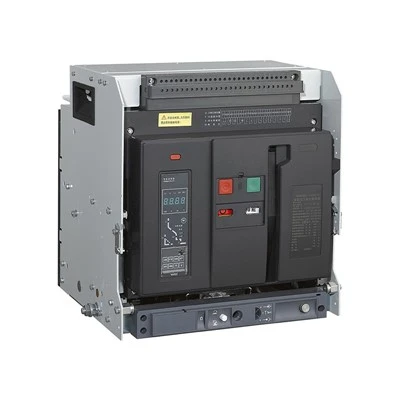
If you’re tired of dealing with faulty breakers, need to replace old ones, or just have questions about what type you need for your project, reach out to work with me. We can talk through your needs, make sure you get the right parts that meet all safety standards, and get them to you fast so you can get your project done right. Don’t wait until something goes wrong—make sure your electrical system has the protection it needs, starting with quality circuit breakers.
Distribution Panelboards References
Miller, A. (2020). Electrical Safety for Residential and Commercial Properties. National Fire Protection Association.
Herrick, J. (2018). Circuit Breakers: Theory, Testing, and Application. Institute of Electrical and Electronics Engineers.
Smith, L. (2021). Ground Fault and Arc Fault Protection: A Practical Guide. Electrical Construction & Maintenance Magazine.
Wenzhou Lanen Electrical Co., Ltd.
Wenzhou Lanen Electrical Co., Ltd. is one of the most professional circuit breakers manufacturers and suppliers in China, also supports customized service with low price. Please feel free to buy CE approved circuit breakers made in China here from our factory. Contact us for more discount information.
Address: Zhiguang Liushi Town Yueqing City Wenzhou City Zhejiang Province
E-mail: lanen@luyele.cn
WebSite: https://www.lanenelectrical.com/
