If you’ve ever stood in a factory or walked past a high-speed electric motor humming at full tilt for hours on end, you know the quiet hero keeping that machine running smoothly: the bearing. As someone who’s spent 12 years in the electric motor bearings supply business—first working in a production shop, then supporting OEMs and maintenance teams across 17 countries—I can tell you that choosing the right bearing for a high-speed application isn’t just about picking a part that fits. It’s about avoiding costly unplanned downtime, boosting energy efficiency, and making sure a motor that’s supposed to spin at 10,000+ RPM doesn’t wear out in six months instead of six years. Electric Motor Bearings
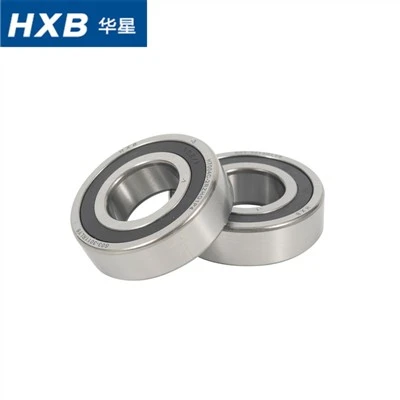
High-speed electric motors are everywhere these days: they power industrial fans, pumps for chemical processing, HVAC systems in large commercial buildings, and even the motors driving production lines in automotive and electronics manufacturing. For these applications, speed isn’t just a number on a spec sheet—it’s critical to output. A fan that runs at 18,000 RPM moves far more air than one at 8,000, which means a pump working at high speed can move more fluid with less energy. But speed brings unique challenges: excess heat, higher centrifugal force on moving parts, and increased friction that can eat into performance before you even turn the motor on. I’ve seen too many projects where a maintenance team grabbed a standard bearing out of stock, only to have the motor seize up 100 hours into a run, costing the plant tens of thousands in lost production and emergency repairs. That’s why getting the bearing selection right is non-negotiable.
Let’s start with the most basic but often overlooked factor: speed rating. Every bearing has a maximum allowable RPM, but that number isn’t a one-size-fits-all figure. It’s tied to the bearing’s design, material, and lubrication. A deep-groove ball bearing, for example, might have a catalog speed rating of 20,000 RPM, but that’s at a light load. If you’re running that same bearing under a heavy axial or radial load at 18,000 RPM, the actual safe operating speed drops sharply because the rolling elements and raceways have to work harder, generating more heat. I once worked with a team at a Midwest steel mill that tried to use standard deep-groove bearings on a 15,000-RPM cooling fan motor. The bearings failed in three months because the load was higher than the catalog rating accounted for, and the heat buildup accelerated grease breakdown. We swapped in high-speed angular contact ball bearings, which are designed to handle both radial and axial loads at elevated speeds, and that motor ran for 27 months before the first scheduled replacement.
Bearing material is the next big decision, and it’s not just about steel anymore. Standard chrome steel bearings work fine for low to moderate speeds, but at high RPM, they’re prone to micro-pitting on the raceways and rolling elements, a common failure mode that happens when tiny cracks form from repeated stress and heat. For high-speed applications, two material types stand out: vacuum-degassed chrome steel and ceramic rolling elements. Vacuum-degassed steel has fewer internal voids than standard steel, which means it’s stronger and more resistant to fatigue at high speeds and loads. We use this material for most medium-duty industrial high-speed motors because it’s cost-effective and holds up well to real-world operating conditions. For extreme high-speed applications—think motors running at 30,000 RPM or higher in aerospace or high-precision machinery—silicon nitride ceramic balls are the way to go. Ceramic is lighter than steel, so centrifugal force on the rolling elements is reduced, and it has higher hardness and better heat resistance. I remember a project for a company making high-speed spindle motors for CNC machines; they tried steel bearings and hit a wall at 28,000 RPM, with bearings seizing after 50 hours. Swapping in ceramic ball bearings pushed their safe speed to 35,000 RPM, with no signs of wear after 1,000 hours of continuous testing. One catch with ceramic bearings: they’re more brittle than steel, so they need to be handled carefully during installation, and they work best with optimized lubrication to maximize their lifespan.
Lubrication is another make-or-break factor for high-speed bearings, and it’s way more than just adding a glob of grease and calling it done. At high RPM, the lubricant’s viscosity changes, and too much lubricant can actually cause more friction than too little. This is called “churning loss”—when the bearing’s rolling elements slosh through excess grease, generating heat that raises the bearing temperature and breaks down the lubricant faster. For most industrial high-speed motors, we recommend low-viscosity synthetic grease designed for high-speed operation, not general-purpose grease. Synthetic lubricants have a more consistent viscosity across temperatures, and they resist oxidation much better than mineral-based greases. For even higher speeds, some applications use oil mist lubrication or oil jet lubrication. Oil mist works by delivering a fine mist of oil directly to the bearing, with very little excess to cause churning, making it ideal for motors running at 25,000 RPM or higher in continuous operation. I worked with a power generation client that switched from grease lubrication to oil mist for their 32,000-RPM generator bearings. Their bearing temperatures dropped by 15°C, and grease-related failures went from four a year to zero. If you’re going the grease route, make sure to follow the bearing manufacturer’s relubrication interval, not just a schedule from a generic manual. Too much relubrication is as bad as too little at high speeds, so we always help our customers calculate the exact amount of grease needed based on the motor’s speed, load, and operating temperature.
Bearing design also plays a critical role in high-speed performance. Angular contact ball bearings are the go-to for most high-speed electric motors because they can handle both radial and axial loads—something standard deep-groove bearings struggle with at elevated speeds. They have a contact angle (the angle between the rolling element and the raceway) that’s optimized for speed; common angles for high-speed applications are 15° and 25°, with lower angles offering less friction and better speed performance for light loads, and higher angles handling heavier axial loads. For even higher speeds, there are super-precision angular contact ball bearings, which are manufactured to much tighter tolerances, with polished raceways and optimized cage designs. The cage is a part that’s often overlooked, but it keeps the rolling elements evenly spaced, preventing them from rubbing against each other or the raceway at high speeds. Cage material is important too: brass cages are durable but can generate more friction at high speeds, while polymer cages (made from materials like PEEK or polyamide) are lighter, reduce friction, and work better for high-RPM applications. We recently had a customer in the food and beverage industry who was getting premature wear on steel cages in their 18,000-RPM bottle filling line motors. Swapping to glass-reinforced polymer cages cut their bearing operating temperature by 10°C and extended bearing life by 40%.
Installation and alignment are two final pieces that even the best bearing won’t survive without. I’ve seen brand-new, $500 super-precision bearings fail in 10 hours because the motor shaft was misaligned by just 0.2 degrees. At high speeds, even tiny misalignment creates uneven load distribution on the bearing raceways, leading to accelerated wear and heat buildup. Proper mounting techniques are key: using a hydraulic press instead of a hammer to install the bearing, making sure the shaft and housing are clean and free of burrs, and checking that the bearing’s end play (the amount of axial movement when the bearing is not under load) is set correctly per the manufacturer’s specs. For high-speed motors, end play is usually minimal—often just a few thousandths of an inch—too much play can cause axial vibration that damages the bearing and the motor itself.
Now, putting this all together, here’s a quick framework to follow when choosing bearings for high-speed electric motor applications: First, identify the motor’s operating speed, load (both radial and axial), and temperature range. If your motor runs above 10,000 RPM under load, skip standard deep-groove bearings and go with angular contact ball bearings. Next, pick the right material: vacuum-degassed chrome steel for most applications, ceramic balls if you’re running above 25,000 RPM. Then, choose lubrication: low-viscosity synthetic grease for most motors, oil mist or oil jet for extreme high-speed continuous operation. Don’t forget the cage design: polymer cages for most high-speed uses, to reduce friction and wear. Finally, make sure installation and alignment are done correctly—this step saves more bearings than any other.
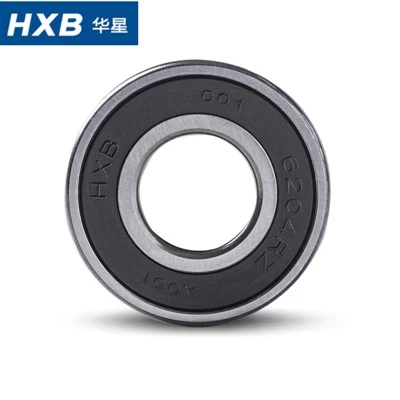
At the end of the day, high-speed bearing selection is about balancing performance, cost, and longevity. Cutting corners on a $20 bearing might save you a few dollars upfront, but unplanned downtime from a failed motor can cost your plant thousands per hour. As someone who’s been in this industry long enough to know that every application is unique, I always tell customers not to rely solely on catalog numbers. Bring us your motor specs, your operating environment, and your production goals, and we can help you pick a bearing that fits perfectly—one that will keep your motor running smoothly, reduce your maintenance costs, and avoid the headaches of unplanned downtime. If you’re working on a new motor design or looking to upgrade existing high-speed motors to boost performance, reach out to our team to discuss your project.
Hybrid Spindle Bearings References
- Harris, T.A., and Kotzalas, M.N. (2007). Rolling Bearing Analysis: Advanced Concepts of Bearing Technology. 5th ed. CRC Press.
- ISO 14636:2010. Rolling Bearings – Radial Ball Bearings – Boundary Dimensions and Boundary Load Ratings. International Organization for Standardization.
- Zaretsky, E.V. (1992). Bearing Design and Life Prediction for High-Speed Applications. NASA Technical Memorandum 103938.
- Lugt, P.M. (2012). A Review of Grease Lubrication in Rolling Bearings. Tribology International, Vol. 48, pp. 131–149.
- American Bearing Manufacturers Association (ABMA). (2020). Standard 9: Angular Contact Ball Bearings. ABMA.
Hangzhou Huaxing Kechuang Holding Group Co., Ltd.
Hangzhou Huaxing Kechuang Holding Group Co., Ltd. is one of the leading manufacturers and suppliers of electric motor bearings in China, featured by quality products and good service. Please rest assured to buy bulk durable electric motor bearings from our factory. Welcome to view our website for more information.
Address: No.553 Yingbin Road, Linping, Hangzhou, 311100, China
E-mail: wmb@huaxingbearing.com
WebSite: https://www.hxbbearing.com/
