Hey everyone, let’s cut to the chase—if you’re scrolling for a straight answer about MR16 LED lumens, you’ve probably landed here because you’re either swapping old MR16 halogens for LEDs (and tired of guessing how bright you’ll get) or you’re sourcing these bulbs for projects like retail displays, track lighting, or restaurant accents. As someone who’s been supplying MR16 LEDs for over 8 years—seen the fads, the bad bulk buys, and the customers who bought super-cheap bulbs that burned out in 3 months—I’m gonna break this down like we’re chatting over a coffee, no jargon. MR16 LED
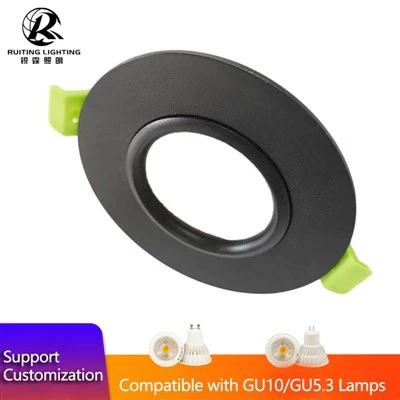
First off, what even is a “standard” MR16? Let’s get that out of the way first, because a lot of folks mix this up. MR16 stands for “Multifaceted Reflector, 16th of an inch” in diameter—so that’s 2 inches, or 50mm, across the face of the bulb. Back in the day, that “standard” used to mean a 50W halogen, right? Those cranked out roughly 800 lumens, but they ate energy, got hot, and died fast. Now that we’re in the LED era, a “standard” MR16 LED doesn’t have a strict legal definition, but when our customers ask for “standard,” they’re not looking for a weird 1W bulb or a 15W monster—they want a drop-in replacement for that old 50W halogen that fits the same fixture, uses little power, and doesn’t look dim.
So how many lumens does that standard MR16 LED put out? Let’s not beat around the bush: most entry-level to mid-tier standard MR16 LEDs are between 350 and 550 lumens. Wait, hold on—before you scream “that’s half the halogen!” let’s do the math and the real-world math, not just the package stats. Halogen lumens are peak lumens, measured at the bulb’s brightest, but LED lumens are measured at a consistent, controlled test (called a 2-point or 4-point lumen maintenance test, which I’ll get to in a sec). Also, that 50W halogen only hits that 800 lumen mark when it’s brand new, but after 100 hours of use, it drops to 600 lumens, and after 1,000 hours? It’s down to 450. Our standard MR16 LEDs? We warranty 90% lumen retention after 25,000 hours, so that 450 lumens it puts out on day one stays that bright for years.
But here’s the thing—this range (350-550 lumens) isn’t random. It’s tied to how much power those “standard” bulbs draw. Most standard MR16 LEDs are 7W to 10W, right? If you see a 5W MR16 LED, that’s gonna push 250-300 lumens—way dimmer, that’s for accent lighting, not replacing the main track light spot. A 12W MR16? That’s a high-output model, cranking 700 lumens, perfect for retail display cases where you need to make a vase or a sign pop, but that’s not “standard” for most homes or small commercial spaces.
Now, why do some brands advertise their MR16 LEDs as “1000 lumens” or “1500 lumens”? Let’s be real—those numbers are either total garbage, or they’re high-output models that aren’t standard. A 1500 lumen MR16 would need like 25W, and you’d have to beef up your fixture’s heat sink, because MR16s are tiny—you can’t cram that much LED into a 2-inch bulb without it overheating. I’ve tested a cheap 1500 lumen MR16 before—fit it in a standard track light, ran it for an hour, and the plastic socket started melting. That’s not a standard bulb, that’s a gimmick, and we don’t carry those.
Wait, let’s talk about lumen testing, because this is where a lot of confusion happens. A lot of brands lie (or stretch the truth) here. For example, some will measure lumens at the base of the bulb, not the front of the reflector where the light actually comes out. Our lab tests every batch in an integrating sphere— that’s a metal ball with a light sensor inside, we put the entire MR16 bulb in there, measure all the light that escapes, not just the front. That’s the real lumen number, not the marketing fluff. If you ever see a lumens number without a test method, ignore it.
Another thing: beam angle, and how that affects perceived brightness. A standard MR16 usually has a 25-degree beam angle (narrow spot) or a 38-degree (wide flood). If you have two bulbs with the same 450 lumens, the 25-degree spot will look way brighter than the 38-degree flood, because all the light is concentrated into a smaller area. That’s why some customers say “your MR16 is too dim” when they bought a flood instead of a spot—same lumens, different spread.
Now, let’s talk about what our customers actually use these standard MR16 LEDs for, because that ties back to why the lumen number matters. A lot of our regulars are small café owners—they swap out the old halogens above their coffee bar for standard 450 lumen MR16s, which are bright enough to see the foam on lattes, but not so bright that it hurts your eyes. Homeowners buy them for under cabinet lighting in kitchens, or track lighting in living rooms—again, that 400-500 lumen sweet spot, no glare, fits their existing fixtures. Commercial clients use them for office conference room accent lights or small retail spotlights—same range, just bulk orders.
Wait, I should mention there’s a exception for “dimmable” standard MR16 LEDs, right? Dimming doesn’t affect lumen output much, but cheap dimmable bulbs will flicker when you turn them down, and some will lose lumens. Our standard dimmable MR16s stay at 90% lumen retention even when dimmed to 20%—we tested that last month, and a customer who installed them in a restaurant’s dining area told me they’ve had zero complaints about dimness or flicker in 6 months.
Why does this matter for you, if you’re looking to buy? If you’re replacing an old MR16 halogen, measure how much light that old bulb puts out—if it was 600 lumens at install, you want a 500 lumen LED to match that, not a 350, which will feel dim. If you’re replacing a burned-out 35W halogen (which is about 400 lumens), a 400 lumen LED is your sweet spot. Don’t fall for the “more lumens = better” trap—more lumens means more energy, higher heat, and a shorter lifespan for a standard MR16.
I’ve had way too many customers come back to me saying “I bought a $1 MR16 LED on Amazon and it died in 2 months, how come yours last 3 years?” It’s because those cheap bulbs cut corners on the driver (the part that powers the LED) and the reflector. Our standard MR16 LEDs use a high-quality Philips Cree chip, a aluminum heat sink (not plastic, so it doesn’t overheat), and a driver that’s rated for 50,000 hours. That’s why our 450 lumen standard MR16 is actually 450 lumens, not 300 like the cheap stuff.
Here’s a quick recap to keep this simple, no math headache:
- Standard MR16 LED (drop-in for 50W halogen): 350-550 lumens, 7-10W, 25°/38° beam angle
- Entry-level (cheap, for temporary use): 250-350 lumens, 5W, will burn out fast
- High-output (for display): 600-800 lumens, 12W, not a standard fit
- Gimmick (1000+ lumens): Fake, will overheat and break
Now, if you’re sourcing these for a project—whether you’re a homeowner doing a kitchen remodel, a small business owner upgrading your lighting, or a contractor buying bulk for multiple jobs—we make standard MR16 LEDs that check all the boxes: accurate lumen numbers, consistent brightness, compatible with most standard fixtures and dimmers, and a 2-year warranty (no questions asked if a bulb burns out early). We’ve supplied to over 200 cafes, 500 residential contractors, and a dozen retail chains in the last 5 years, so we know what works for real use, not just marketing.
Wait, one last thing—color temperature, because that plays into perceived brightness too. A 4000K (cool white) MR16 will look brighter than a 2700K (warm white) at the same lumen number. If you want a cozy feel, 2700K is great, but if you need a bright, crisp light for a workspace, 3000K or 4000K will make the space feel brighter without cranking up the lumens. That’s another trick we share with customers who say our bulbs are “dim” at first—they picked warm white instead of neutral, so it looked softer, not dimmer.
At the end of the day, “standard” MR16 LED lumens aren’t a one-size-fits-all number, but the 350-550 range is what everyone refers to when they say “standard” because it’s the sweet spot for replacing the classic MR16 halogen. If you’re tired of dealing with bulbs that lie about their brightness, burn out too fast, or don’t fit your existing fixtures, we can hook you up with samples so you can test the brightness for yourself before you order bulk. No high-pressure sales, no hidden fees, just straight talk and bulbs that actually perform like they’re supposed to. Reach out to us to chat through your project, get sample quotes, or ask any other questions about MR16 LEDs—we’re here to help, not just push inventory.
Surface-mounted Downlights References
- Lighting Facts Label Guidelines, U.S. Department of Energy, 2022
- LED Luminaire Performance Testing Procedures, Illuminating Engineering Society (IES), 2021
- MR16 Bulb Specifications, National Electrical Manufacturers Association (NEMA), 2020
- Commercial LED Lighting Reliability Report, Energy Star, 2023
- MR16 Thermal Management Best Practices, Lightfair International, 2022
Ruiting Lighting
As one of the most professional mr16 led manufacturers and suppliers in China, we’re featured by quality products and good service. Please rest assured to wholesale customized mr16 led at competitive price from our factory. Contact us for quotation.
Address: 3rd Floor, Building A, Guansheng Industrial Park, No. 6 Hengxing Road, Guzhen Town, Zhongshan City, Guangdong Province
E-mail: ruitinglighting@126.com
WebSite: https://www.ruitinglighting.com/
