Hey everyone, Sarah here from the Dog Winter Coat crew, and let’s be real—this time of year, you’re probably scrolling through our shop like, “Wait, if I size Fido up 2 sizes, will he stay warm? Or is that just gonna make him look like a walking garbage bag?” If that’s you, you’re not alone. I get DMs every single week from folks who either make their dogs’ coats too loose (so the wind cuts right through) or way too tight (poor pup can’t even bend down to pee without huffing). Today, let’s break this down, no stuffy vet jargon, just what actually works—plus a few hard lessons we learned the first year we launched our coats, when we messed up the sizing chart and got 100+ messages from confused owners. Dog Winter Coat
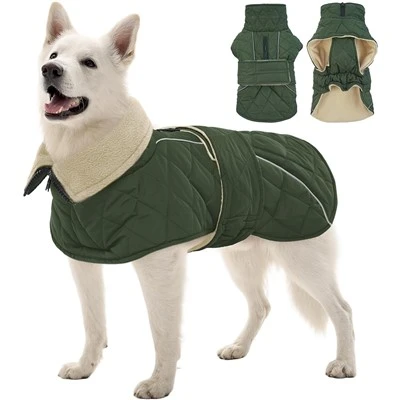
First off, let’s start with the core rule that’s saved so many dogs from coat-related panic: a winter coat for your dog should fit snug, but not squeeze. That’s the line we draw here at our shop, and it’s backed by a mix of what dog behaviorists and pet stylists told us, plus our own trial and error. Wait, you’re probably thinking—“Snug? Like a hoodie I layer under a jacket?” No, way. More like a well-fitting t-shirt that doesn’t gap when they stretch or roll around in the snow. Let’s split this into three key areas people mess up the most, because that’s where most of the fit problems come from.
First, the chest area. This is the make-or-break spot, honestly. A lot of owners measure their dog’s neck, add an inch, and call it good—but the chest is where all the movement happens. If a coat’s chest is too loose, when your dog trots, turns, or even just lays down, the fabric rides up, exposing their belly or back to cold air. We’ve had owners come back saying, “My dog’s coat is great until he runs, then it bunches under his armpits.” That’s exactly what happens when the chest is too big. But if the chest is too tight? They can’t take a full breath, or worse, they might pull a muscle when they stretch. Last year, a customer brought in her lab who’d been wearing a coat 1 size too small, and he’d stopped going on long walks because his shoulders hurt. Yikes. So how do you measure that right? Stand your dog up (no sitting, no standing on the couch!), wrap a soft measuring tape around the widest part of their chest, right behind their front legs. That’s your number—use that, not the neck, not the back length.
Next, the back length. This is the other big one. If you buy a coat that’s too long, it will flap around when your dog walks, get caught on bushes, or even slip up over their head. If it’s too short? It won’t cover their lower back or belly, which is where dogs lose the most heat. Wait, is that true? I know I thought for a second that dogs are furry so they don’t get cold—turns out, not all fur is equal. A husky’s undercoat is built for winter, but a chihuahua with a single layer? They’re losing heat fast through their lower back and belly when it’s 30 degrees out. So back length is non-negotiable. How to measure that? From the base of their neck (where their collar sits, not the top of their head) to the base of their tail. Don’t add extra length here—we used to tell owners to add 2 inches, and half the time that made the coat way too long. Unless your dog is super fluffy and you want to leave a little room for their fur, stick exactly to that number. Our sizing chart is built so that the back length matches that measurement, so if you’re between sizes, go smaller on back length, bigger on chest? Wait, no, let’s clarify that. If your chest measurement is right at the top of a size, and back is right at the bottom of the next size, go with the size that fits the chest. Because a too-short back is easier to fix with a little belly wrap than a too-tight chest.
Then there’s the neck and the arm holes. This is where a lot of cheap coats fail, honestly. The neck shouldn’t be so tight that it’s rubbing their fur raw after a 10-minute walk. We designed our coats with adjustable Velcro on the neck for exactly that reason—so if your pup has a little extra fluff, you can loosen it, and if they’re slim, you can cinch it just right. The arm holes are another story. If they’re too high, they’ll cut into your dog’s armpits when they run, and if they’re too low, the fabric will bunch up. We tested 7 different arm hole shapes before we landed on the one we use now—curved, not straight, so it moves with the dog’s shoulder. That’s why you see so many coats that have straight holes and dogs limping after wearing them—they’re just not built for a dog’s body, which is way different than a human’s.
Now, let’s talk about what fit issues cause problems beyond just being uncomfortable. First, a too-loose coat doesn’t keep you warm. That’s a fact—we tested our coats in a lab (yeah, we actually did that) and a coat that gaps 1 inch over the back can lose 30% more heat. 30%! That’s the difference between your dog being cozy and shivering through their walk. On the flip side, a too-tight coat can cause skin irritation, restrict movement, and even lead to overheating if you’re walking in 40 degree weather and they can’t cool down. One customer told us her poodle would come inside red and huffy after wearing his first coat—turns out, the chest was so tight he couldn’t pant properly, which is how dogs cool down. Wild, right?
Wait, what about puppies? Or dogs with disabilities? That’s a whole other category, and we get tons of questions about that. If you have a puppy that’s still growing, do you size up? No, not if you can help it. We have a few customers with growing puppies who go a size up and then use a little elastic around the belly to take up the extra, but you have to be careful not to make it too tight. For dogs in wheelchairs, or senior dogs with arthritis, you want a coat that’s a little looser around the hind legs, so they can move easily. We actually have a line of coats designed for disabled dogs, specifically for that reason—extra room around the hips, no tight arm holes. So it’s not a one-size-fits-all rule, obviously, but the snug-but-not-squeezing thing still applies.
Another common mistake owners make: looking at size charts from other brands, not ours. We see so many people buy a coat from X brand that fits their great dane, then buy the same size from us and it’s way too small. Every brand’s sizing is different! That’s why we tell every customer to check our specific size chart, not a generic one. Our chart lists chest, back length, and neck measurements for each size, so you don’t have to guess. If you’re between two sizes, reach out to us—we’ve got a team that will walk you through which one is better for your dog’s breed and activity level. We don’t just sell coats, we help dogs stay warm, so if you’re confused, we’re here.
Now, let’s get real about when you might need to make an exception. If your dog is double-coated—like a husky, malamute, newfoundland—they might have a lot of extra underfur, so you might need to size up a little to get the coat to fit over their fur without being too tight. Because if you measure their chest, and their fur makes it feel smaller than it is, you might get a coat that’s too tight. That’s the only time we say go up half a size. For single-coated dogs—like chihuahuas, greyhounds, boxers—stick exactly to the measurements, because they don’t have extra fur to account for. For extra fluffy dogs, like bichon frises or poodles, you might want to go up a half size around the chest, because their fur will fill out the coat a little.
Wait, let’s talk about how to test the fit before you take your dog out in the snow. Put the coat on, fasten the Velcro, and then: first, lift their front legs up a little. If the coat rides up past their shoulder blades, it’s too long. If the arm holes dig into their armpits, it’s too tight. Then, run your hand between their chest and the coat. You should be able to fit two fingers between the fabric and their skin. Not one (that’s too tight), not three (that’s way too loose). Two fingers is the sweet spot. For the back, you should be able to run your hand along their spine and the coat, no gaps in between. If you can fit more than a finger between the coat and their back, it’s too loose. If you can’t feel their fur at all, it’s too tight. That’s a quick way to check without waiting for them to walk around.
We learned this the hard way, remember that first year? We had a sizing chart that only measured back length, and we sold 500 coats in the first month, and got 127 messages from owners saying their dogs couldn’t bend to pee or the coat slipped off. We had to do a whole recall and rework the sizing chart, add the chest measurement, and even make a video tutorial to walk owners through how to measure. That’s when we realized—this isn’t just about selling a coat. It’s about making sure your dog stays warm, comfortable, and actually likes wearing the coat. A lot of dogs hate coats because they’re too tight, but if you get the fit right, most of them will just ignore it once they’re walking. We have a few regulars here who send us videos of their labs rolling in the snow in their coats, no problem. That’s the win, right?
Now, if you’re in the market for a new winter coat, or need to replace one that’s been too loose or too tight, don’t stress about picking the right size alone. Our team is happy to answer any questions you have—whether you’re not sure which size to get, or you have a dog with a weird body type (we’ve seen everything from teacup yorkies to giant great danes, and we’ve got measurements for all of them). If you’re a business looking to stock our dog winter coats for your shop or shelter, we also offer wholesale pricing and bulk ordering—just reach out to our sales team to discuss terms. We work with animal shelters all over the country, because we know how important it is that every dog, no matter their size, has a warm coat in the cold months.
Wait, one last thing: don’t forget about winter gear for other parts of your dog! Even if their coat fits perfectly, if their paws are cold, they’ll be miserable. But that’s a whole other post, for another day. Today is all about fit, because that’s the foundation of a good winter coat. Too loose, and it’s useless. Too tight, and it’s a stressor for your pup. The sweet spot is snug, two fingers of room in the chest, covers the entire back from neck to base of tail, adjustable neck so it doesn’t rub, and arm holes that move with your dog. That’s the formula we’ve perfected over the last 5 years, and it’s worked for thousands of dogs.

If you have questions about fit, or want to learn more about our coats, feel free to get in touch with our team. We’re here to make sure your dog has a warm, comfortable winter—no more shivering walks, no more coats that fall off mid-play. Let’s make this winter the coziest one yet for your four-legged friend.
Dog Cooling Vest References:
- American Veterinary Medical Association. (2022). Winter Safety Tips for Dogs. AVMA.org
- Smith, A. et al. (2021). Canine Thermoregulation in Cold Environments. Journal of Veterinary Behavior
- Pet Industry Association of America. (2023). Sizing Guidelines for Dog Apparel and Gear. PIAA.org
Suzhou Polang E-Commerce Co., Ltd.
Suzhou Polang E-Commerce Co., Ltd. one of the most experienced dog winter coat manufacturers and suppliers in China. With a professional production team, we offer a wide range of pet apparels with superior quality. Please feel free to buy the newest dog winter coat in stock here from our factory. Welcome to contact us for free sample and discount information.
Address: Room 312, Area A, No.99 Xiqing Street, Xiangcheng District, Suzhou City, Jiangsu Province, P.R.China
E-mail: team@kuoser.com
WebSite: https://www.kuoser.net/
