If you’ve ever explored the world of power electronics, transformer design, or electromagnetic component manufacturing, you’ve probably encountered core materials like ferrite — the ubiquitous, time-tested staple that’s been a go-to for decades. But as a supplier of amorphous magnetic materials and non-ferrous casting roll sleeves, I get asked more and more these days: when should a designer choose amorphous over ferrite? And what makes those two options so different, anyway? Let’s break it down, not with overly dense jargon, but with the real-world context I’ve picked up working with manufacturers, engineers, and product designers for years. Amorphous Magnetic Materials and Non-ferrous Casting Roll Sleeves
First, let’s start with basics: both amorphous magnetic materials and ferrites are soft magnetic cores, meaning their job is to conduct magnetic flux with minimal energy loss — a critical function in transformers, inductors, electric motors, and even renewable energy hardware like grid-tie inverters and wind turbine generators. But their core compositions, how they’re made, and how they perform in real applications set them miles apart.
Let’s talk about ferrites first, because that’s the material most people know. Ferrites are ceramic compounds made from iron oxide (rust, essentially) mixed with other metal oxides like manganese, zinc, or nickel. They’re manufactured by pressing powdered materials into shape, then sintering them at extremely high temperatures to fuse the particles together. That process gives them a rigid, brittle structure — great for many uses, but with tradeoffs that become obvious when you push for higher efficiency, smaller size, or broader temperature ranges. Ferrites have relatively low saturation flux density, which means when you run a high current through a core made of ferrite, it hits a point where it can’t hold any more magnetic flux — a state called saturation. Once that happens, the core stops working as a conductor, energy loss spikes, and your component can overheat or even fail. Ferrites also have what’s called a high coercivity, meaning they don’t magnetize or demagnetize easily — so there’s more energy wasted every time the magnetic field flips, like in AC power applications. That energy loss, called core loss, is measured in watts per kilogram, and for many modern applications, those watts add up fast: over the life of a single transformer, core loss can account for thousands of dollars in wasted electricity, not to mention extra heat that requires larger cooling systems.
Now, amorphous magnetic materials — the other side of the equation. Amorphous metals (sometimes called metallic glasses) are not ceramic, they’re metal alloys, made from elements like iron, cobalt, nickel, and boron. The big difference in their structure is that they don’t have the ordered, crystalline atomic structure of ferrites or traditional silicon steel. Instead, their atoms are arranged in a random, glass-like pattern, and that’s where their superpowers come from. We manufacture our amorphous cores using a rapid solidification process: we melt the alloy, then spray it onto a cooled wheel at speeds up to a million degrees per second, which freezes the metal before the atoms can line up into a crystal structure. The result is a thin, flexible strip (usually 25 to 50 microns thick, about the thickness of a human hair) that’s soft, ductile, and way more magnetically efficient than ferrite.
The performance gap between the two is dramatic, and it’s not just theoretical — we see it every day with our customers. Let’s break down the key metrics that matter most to engineers working with these cores:
First, core loss. At typical AC operating frequencies (50/60 Hz for grid power, up to 10 kHz for many consumer electronics), amorphous cores have 50% to 80% less core loss than equivalent ferrite cores. Let me give a concrete example: a 1kVA distribution transformer made with ferrite might have a no-load loss of around 10 watts, while the same size transformer made with amorphous core would have a no-load loss of just 2 watts. For a utility company with tens of thousands of these transformers spread across a grid, that adds up to millions of dollars in annual energy savings — and that’s why amorphous cores are now standard in new distribution transformers in most of the world’s developed markets. Compare that to ferrite, where core loss becomes a bigger problem at higher frequencies: above 10 kHz, ferrite’s core loss can jump quickly, making it a poor choice for high-frequency applications like fast chargers or EV traction inverters, even if it’s cheaper upfront.
Next, saturation flux density. Amorphous materials have a saturation density nearly double that of ferrite — around 1.5 Tesla for amorphous iron-based alloys, versus just 0.5 Tesla for manganese-zinc ferrite. What does that mean for a designer? A smaller, lighter core. Because amorphous can handle twice the magnetic flux, you can build a transformer or inductor with half the size and weight of an equivalent ferrite component, without risking saturation. For industries like electric vehicles or aerospace, where every kilogram saved translates to better range, lower fuel use, or more payload, that’s a game-changer. Ferrite’s low saturation means you either need a larger core, or you have to derate the component — cutting into power output, the opposite of what most engineers want.
Then there’s temperature stability. Ferrites are ceramic, so they’re hard and brittle, and their magnetic properties shift a lot with temperature. Manganese-zinc ferrite, for example, loses up to 30% of its permeability as temperatures rise from 25°C (room temp) to 100°C, the average operating temp for many power components. Amorphous alloys, on the other hand, have much more consistent permeability across a wide temperature range — we’ve tested our amorphous cores at temperatures from -40°C to 150°C, and their core loss changes by less than 10% over that span. That makes amorphous far more reliable for harsh environments: industrial equipment, outdoor grid infrastructure, EV batteries, all of which see extreme temperature swings. Ferrite can crack or even shatter if it’s dropped, exposed to thermal shock, or used in applications where vibration is constant — amorphous’s flexible, metal structure can absorb impact and vibration much better, too.
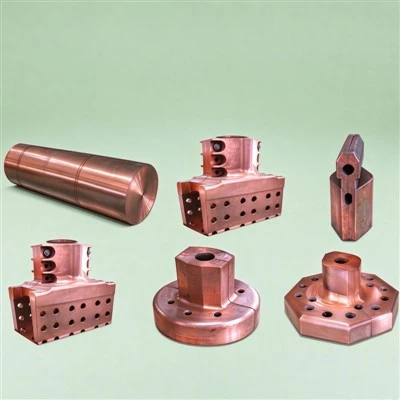
Cost, of course, is a big factor that always comes up. For many small, low-frequency applications, ferrite is still cheaper upfront. The raw materials for ferrite are abundant and low-cost, and manufacturing processes for ferrite cores are well-established, with low upfront tooling costs. But here’s the catch: when you factor in total cost of ownership (TCO), amorphous often comes out ahead. Let’s go back to that distribution transformer example: a ferrite transformer might cost $500 more upfront than an amorphous one, but over 20 years of operation, the amorphous transformer saves $2,000 in electricity costs. For high-frequency applications, the math shifts even more: a high-frequency inductor for a fast charger needs to handle 10 kHz of current, where ferrite’s core loss is so high you have to use a larger core to keep it cool, and even then, it’s less efficient than an amorphous core. For those, the higher upfront cost of amorphous is offset by smaller size, lower cooling costs, and longer component life. Also, our non-ferrous casting roll sleeves — a separate product line we supply — complement our amorphous materials perfectly, especially when it comes to manufacturing custom-shaped cores. Roll sleeves let us machine tailored core geometries without compromising the amorphous structure, so we can build custom components that fit exactly into a customer’s existing design, no extra rework needed.
Wait, but no material is perfect, right? Ferrite still has a place. For small, low-power applications like a phone charger (20W to 100W), ferrite works fine — it’s cheap enough, and the energy loss is negligible over the charger’s 5-year lifespan. Ferrites are also easier to shape into complex geometries, like the small E-I cores used in low-power transformers, because they can be sintered into intricate forms more easily than thin amorphous strips. But for medium to high-power applications, especially where efficiency matters, amorphous is almost always the better long-term choice.
Let me also clear up a common misconception: some people think amorphous materials are just a new gimmick, or that they’re too fragile. As someone who’s worked with these materials for over a decade, I can tell you that’s not true. Early amorphous materials had durability issues, but modern alloy formulations and our casting processes have fixed that — our amorphous strips are strong enough to handle the winding, lamination, and assembly processes required for manufacturing, and they don’t degrade over time like some older metal alloys. We also back all of our products with performance testing, so customers know exactly what they’re getting, no surprises.
Another area where amorphous outperforms ferrite is in DC bias applications. A lot of power components, like inductors for EV drive systems, run with a mix of AC and DC current. Ferrites have a very low tolerance for DC bias: even a small DC current can push the ferrite toward saturation, increasing core loss sharply. Amorphous materials, with their higher saturation density and better DC bias performance, handle these mixed current loads far more reliably, making them the preferred choice for EV and renewable energy hardware.
So when should you choose which? Let’s sum up the use cases, based on what we see from our customers every day:
Pick ferrite if:
- You’re building a low-power (under 500W) component for low-frequency (50/60 Hz) operation
- Upfront cost is the only deciding factor, and you don’t need long-term efficiency gains
- You need a complex, custom core shape at a low production volume
Pick amorphous if:
- You’re building medium to high-power components (500W and up) for 50/60 Hz or high-frequency operation
- Efficiency, size, or weight are priorities (distribution transformers, EV parts, industrial inverters, renewable energy hardware)
- You operate in a harsh environment with temperature swings or vibration
- You want to lower total cost of ownership, not just the initial purchase price
And here’s the thing: the gap between these two materials is only getting wider. As regulations around energy efficiency get stricter — the EU’s Ecodesign rules, for example, now require distribution transformers to have 30% lower no-load loss than 10 years ago — amorphous cores are becoming the standard, not an alternative. For us, as a supplier of both amorphous magnetic materials and non-ferrous casting roll sleeves, that means we’re constantly working to refine our products to meet those evolving needs: thinner amorphous strips for smaller components, custom core shapes that fit exactly into customer designs, and roll sleeves that let us machine precision parts without sacrificing the amorphous structure’s magnetic properties.
I’ve heard engineers say, “Why switch when ferrite works fine?” And I get that — change is scary, and testing a new material requires time and investment. But over the years, we’ve helped hundreds of customers make the switch, and almost all of them come back to say they regret not doing it sooner. The energy savings alone add up, but the smaller size means they can fit components into designs that were previously too big, and the durability means less downtime and fewer replacements.
If you’re designing a new component, or looking to upgrade an existing one, and you’re trying to decide between amorphous and ferrite — or if you just want to learn more about how our materials can fit your project — I’m here to talk. We work with small startups and large global manufacturers alike, and we can help you run the numbers on total cost of ownership, test sample cores, or even design a custom component tailored to your exact needs. Whether you’re building transformers for the grid, inductors for EVs, or motors for industrial equipment, we can provide the right core material and casting solutions to get the job done right.
Don’t just take my word for it, either. We’ve partnered with dozens of engineering firms and manufacturers who’ve published data on amorphous core performance, and third-party tests consistently show that amorphous reduces core loss by up to 75% compared to equivalent ferrite cores at 50 Hz. For anyone looking to make their components more efficient, more reliable, or smaller, that’s a difference you can’t ignore.
When it comes to magnetic core materials, ferrite has been the king for a long time, but amorphous is the future. It’s not just a better material — it’s a material designed to meet the demands of today’s power-hungry world, where every watt saved matters, and every kilogram counts. If you’re ready to explore what amorphous can do for your project, reach out to our team to discuss your requirements and see how we can support your work.
Nuclear Power and Nuclear Fusion Equipment Parts References:
- McHenry, M. E., et al. "Amorphous and Nanocrystalline Alloys for Power Applications." Annual Review of Materials Research, vol. 40, no. 1, 2010, pp. 271-305.
- Ferrite Core Manufacturers Association. "Global Trends in Soft Ferrite Core Performance, 2022."
- International Energy Agency. "The Role of Efficient Transformers in Grid Modernization." IEA Energy Efficiency Series, 2021.
- Li, Y., et al. "Comparison of Amorphous Metal and Ferrite Cores for Distribution Transformers." IEEE Transactions on Power Delivery, vol. 33, no. 4, 2018, pp. 1897-1905.
- Nan, C. W., et al. "Soft Magnetic Materials for Electromagnetic Devices: A Review." Journal of Materials Science, vol. 52, no. 18, 2017, pp. 10591-10618.
Yantai Wanlong Vacuum Metallurgy Co., Ltd.
Yantai Wanlong Vacuum Metallurgy Co., Ltd. is one of the leading manufacturers and suppliers of amorphous magnetic materials and non-ferrous casting roll sleeves in China. With a professional production team, our factory is able to offer bulk special copper alloy materials and components with superior quality. Also, customized service is available.
Address: NO.7 ZHONGSHAN ROAD, CHINA(SHANDONG) PILOT FREE TRADE ZONE, YANTAI AREA
E-mail: wlwendy@yt-wlvm.com
WebSite: https://www.ytwlvm.com/
