If you’ve ever flown a drone—whether for fun, mapping a construction site, or grabbing that perfect aerial shot of a local festival—chances are you didn’t even think about the tiny piece of tech keeping it from drifting off into the sunset: the drone GPS module. As someone who’s spent years working in drone accessories (yes, the good stuff that actually matters, not the cheap junk that dies mid-flight), I get asked all the time what this little component actually does, and why it’s non-negotiable for anything beyond a toy drone you toss in the park. Let’s break it down, no boring jargon, and explain why this module is the unsung hero of every successful drone flight. Drone Accessories
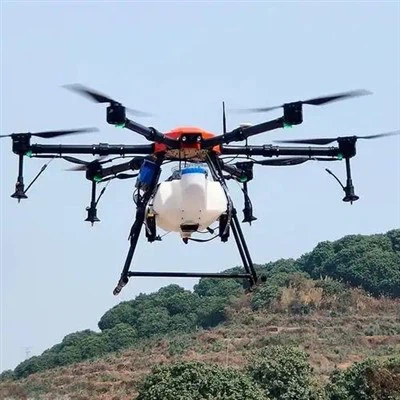
First, let’s cut to the basics: a drone GPS module is essentially the drone’s brain for knowing where it is in 3D space. Most people know GPS from their phones—your phone pinpoints your location using satellites, right? A drone’s module does the same thing, but way faster and more precise, because drones move through air, not on solid ground. Think of it like this: your phone is for “I’m at the coffee shop on 5th Street,” but a drone’s GPS module is for “I’m 120 meters high, 87 meters north of the old bridge, and my exact position right now is (insert super specific coordinates) down to the centimeter almost.” That’s the difference between a drone that hovers and one that floats away like a lost balloon.
Here’s the cool part: it doesn’t just use the standard GPS satellites you have in your car. Most modern drone GPS modules also hook into GLONASS (Russia’s satellite system), Galileo (Europe’s), and sometimes even BeiDou (China’s) for backup. Why? Because if one satellite signal is blocked—say, you’re flying under thick tree cover, or between two tall skyscrapers—having multiple systems means the module doesn’t freak out. I’ve seen so many drone fails because someone was flying in a downtown canyon and their cheap drone only used one GPS: boom, it lost signal, drifted into a building, and totaled the $500 camera. That’s the kind of mistake we sell accessories to prevent.
Now, what does it actually do during a flight? Let’s walk through a typical trip. When you turn on your drone, the GPS module doesn’t just start working right away—it needs to “home in” first, called cold start. That’s the 10-30 seconds you wait before takeoff, watching the number of satellites blink on the app. During that time, the module is calculating its position relative to those satellites, locking in your home point (the spot where you took off). Once that’s done, every part of your flight relies on it: hovering, returning to home, following a waypoint—all of it.
Take hovering, for example. If you’re flying in light wind, you might not notice, but without a GPS module, your drone would drift. I tested a no-GPS drone once (don’t do this) and watched it move 20 feet sideways in 5 minutes, just from a small breeze. The GPS module works with the drone’s flight controller and motors to make tiny adjustments: if it detects it’s moved 3 feet east of its target, it sends a signal to the motors to push it back west, almost instantly. That’s why your $1,500 Mavic can hold perfectly still for a 20-minute video shot, while a $50 toy drone looks like it’s being shaken by an invisible hand.
Then there’s the return-to-home (RTH) feature, which is probably the most important function of the GPS module. If your drone loses signal, or its battery gets low, it uses its stored home point coordinates to fly straight back to where it started. I’ve had customers tell me this saved their drone—once, a guy was flying his drone over a lake, forgot to check his battery, and the module triggered RTH, bringing it back just in time before the battery died. Without a proper GPS module, that RTH would be useless; it would have no idea where “home” was, and would either crash into the lake or fly off who knows where. A lot of cheap knockoff drones have garbage GPS modules that can’t lock a home point, so we don’t carry them—we only stock modules that work with top-tier satellite systems, because we’ve seen what happens when they don’t.
It’s not just recreational flights, either. For pros—farmers using drones to crop dust, surveyors mapping land, photographers shooting for big brands—the GPS module is critical for accuracy. A farmer doesn’t want his drone spraying fertilizer over the neighbor’s field, so the GPS module lets him set precise waypoints, so the drone flies exactly the same path every time. Surveyors use it to get measurements down to the inch, which is impossible without a reliable module. We’ve had a lot of professional drone companies reach out to us for replacement GPS modules when their old ones wear out, because they can’t afford to have a survey delayed over a bad component.
Now, let’s talk about the common misconceptions. Some people think all GPS modules are the same, but that’s totally not true. There’s the module that comes built into a cheap toy drone, which might only work with GPS, locks in 5 satellites at best, and drifts like crazy. Then there’s the high-precision modules we sell, which work with 4+ satellite systems, lock in 15+ satellites in 5 seconds, and have centimeter-level accuracy. The difference is night and day. I’ve had a customer buy a cheap module from Amazon, install it in his small business drone, and it couldn’t hold a position—he ended up wasting a whole day of mapping because the drone kept drifting. He swapped to our module, and now he uses it for all his jobs. That’s why we focus on quality: we don’t want our customers to have to deal with those headaches.
Another thing: GPS modules work with other drone accessories too. Like, if you have a drone with a FPV (first-person view) camera, the GPS module lets you mark waypoints on your screen, so the drone follows them while you fly. Or if you have a payload release system (for dropping supplies, like a camera or a small package), the GPS module lets you set a specific altitude to drop at, so it doesn’t hit the ground too hard or the top of a tree. That’s why a lot of drone accessory builders partner with us—our modules are compatible with almost all flight controllers, so they can build products that actually work, not just look cool.
Wait, let’s get real for a second. No component is perfect. GPS modules can have issues if you’re flying in areas with a lot of interference—like near big radio towers, or underground (but duh, you don’t fly drones underground). That’s why we always tell customers to check satellite coverage before flying, and to carry a backup, like a visual line of sight, just in case. But even with that, a good GPS module is still the most reliable tool you have for keeping your drone safe. I’ve seen way too many people blame the drone for crashing, when really it was a cheap GPS module that couldn’t lock in, or was outdated. That’s what we’re here for: to provide replacements that fix those problems.

Let me wrap this up. A drone GPS module is way more than just a “satellite locator”—it’s the system that gives your drone spatial awareness, keeps it from drifting, enables return-to-home, makes precision flights possible, and keeps your investment (and any expensive gear like cameras) from getting lost or damaged. As a drone accessory supplier, we’ve tested dozens of modules, and we only stock the ones that stand up to real use—whether that’s a kid flying for fun, a farmer checking his crops, or a pro mapping a 100-acre field.
Firefighting Drone If you’re a drone pilot who’s dealing with a flaky GPS module, or a builder who needs a reliable one for your custom drone setup, reach out. We don’t just sell parts—we’ve been in the drone game long enough to know what works, and we’re here to help you pick the right module for your needs. Don’t waste another flight because of a bad component—let’s chat.
References
- Drone GPS Technology Fundamentals. Drone Industry Association.
- Satellite Navigation for Unmanned Aerial Systems. Journal of Aerospace Engineering.
- Performance Comparison of Multi-GNSS Modules for Small Drones. International Journal of Remote Sensing.
Shandong Lesong Drone Technology Co., Ltd.
As one of the most professional drone accessories manufacturers in China, our products have good reputation in the market. Please rest assured to wholesale high quality drone accessories for sale here from our factory. Good service and punctual delivery are available.
Address: Yuncheng County, Heze City, Shandong Province
E-mail: Ella36988@163.com
WebSite: https://www.china-uavfactory.com/
