As a multi-core flexible cable supplier who’s spent the last 12 years troubleshooting these products for industrial, automation, and robotics clients, I’ve learned that while multi-core flexible cables solve a lot of wiring headaches—cutting installation time, reducing cabinet clutter, and streamlining signal/power runs in tight spaces—they carry tangible drawbacks that many engineers and even procurement teams overlook during initial specification. I’ve seen this play out firsthand: last quarter, a longtime automotive assembly client swapped our standard multi-core flexible cable for a competing brand after a cheaper quote, only to have 17 robot arm cables fail in 6 weeks due to the exact flaw I’m going to break down here. That’s why I’m pulling back the curtain on the real disadvantages of these cables, not as a sales pitch for my products, but because I’ve earned the right to talk about their pain points after walking through them with dozens of factories across North America. Multi Core Flexible Cable

First, let’s ground this: multi-core flexible cables bundle 3 to 50 individual conductors (each insulated, sometimes color-coded) into a single jacket, unlike single-core cables that run separately. The flexibility is intentional—for robotic joints, drag chains on CNC machines, or moving conveyor systems that flex up to 10 million cycles over their lifespan. But that bundled structure is the root of nearly every disadvantage we’ve tracked.
The biggest, most common issue I see is uneven conductor fatigue, especially in dynamic applications. When a flexible cable bends, it stretches on the outer radius of the bend and compresses on the inner. In a multi-core bundle, conductors closest to the jacket’s outer edge (the ones exposed to more stretching) will degrade faster than those tucked in the center. Over time, the outer conductors develop tiny, invisible cracks in their copper strands (micro-fatigue), and eventually break—often without warning. I remember a packaging plant client who thought their robot was malfunctioning, only to trace the issue back to 2 power conductors on the cable’s outer edge that had snapped mid-bend. The center conductors, which had less stress, were still fully intact. This isn’t a minor bug: in our 2023 client failure data, 62% of dynamic application cable issues we resolved were traced back to uneven conductor fatigue, and that’s directly tied to multi-core bundling. Single-core cables, where each conductor moves freely within its own sheath, distribute stress far more evenly, so fatigue is a much slower, more predictable failure.
Next, there’s the risk of conductor-to-conductor crosstalk, which is a hidden problem for mixed-signal cables. A lot of multi-core flexible cables are built to carry both low-voltage sensor signals and high-voltage power in the same bundle. When conductors are insulated with thin materials to save cost and keep the cable small, the electrical fields from the high-voltage power conductors can bleed into the nearby signal conductors. This causes sensor noise, data lag, or even false triggers—disastrous for precision automation, like the vision systems in a semiconductor fab. A medical device client once told me that their automated syringe filling machine was misaligned 12 times a week, ruining $1,200 worth of materials each time. We traced the issue to crosstalk between a 24V power conductor and a 5V temperature sensor conductor in a cheap multi-core cable they were using; the manufacturer had used 0.2mm PVC insulation instead of the 0.5mm needed for mixed-signal bundles. Even when insulation is up to spec, the tight spacing of conductors in a multi-core bundle creates more capacitance between conductors than separate cables, which amplifies this crosstalk. I’ve had clients switch from multi-core to individual single-core cables for their signal runs to eliminate this issue, even though it meant longer installation time—they’d rather that cost than the downtime.
Then there’s installation and repair complexity. On paper, bundling seems easier: one cable instead of five. But when you’re working in a drag chain with 10 other cables, a single core breaks in a multi-core, you can’t replace just that one—you have to swap the entire cable. That means re-terminating all conductors, re-testing, and often taking the machine offline for hours. I’ve had a steel mill client who had a cable fail mid-shift in their slab handling robot; because it was a multi-core, they spent 11 hours replacing it, costing an estimated $180,000 in lost production. If it had been single-core, they could’ve swapped just the broken conductor in 45 minutes. What’s worse, if color coding fades (which happens when cables are exposed to oil, coolant, or UV light in industrial environments), identifying which conductor is which becomes a nightmare. I’ve seen technicians trace conductors with a multimeter for 2 hours just to find the broken one, when single-core cables have clear, consistent color coding that never wears as fast.
Cost is another underdiscussed disadvantage, especially when you compare long-term total cost of ownership (TCO), not just upfront price. A 2022 study from the Industrial Equipment & Manufacturers Association (IEMA) found that multi-core flexible cables have a 30% higher lifecycle cost than single-core cables in dynamic applications, even if the upfront multi-core cable is 15% cheaper. Why? Because of the frequent failures, the high cost of downtime, and the fact that repairing or replacing a multi-core is far more labor-intensive. I also carry a hidden cost of multi-core cables: over-spec sizing. If you have a bundle with a power conductor, a signal conductor, and a ground, you need a larger cable jacket to fit all three, which adds material cost. Single-core cables let you size each conductor exactly to its ampacity, so you don’t waste material on extra jacket or insulation.
Wait, but let’s not pretend all multi-core flexible cables are bad—they do have their place, right? For static applications, like wiring control cabinets where cables never move, multi-core is perfect. But in dynamic applications, the drawbacks are hard to ignore. I’ve seen clients force multi-core cables into dynamic setups because they think it’s the only option, only to regret it when downtime spikes. That’s why, as a supplier, I don’t push multi-core for every job— I take the time to talk through the application, whether it’s a static control panel, a robotic arm, or a conveyor, and match the cable to the actual needs.
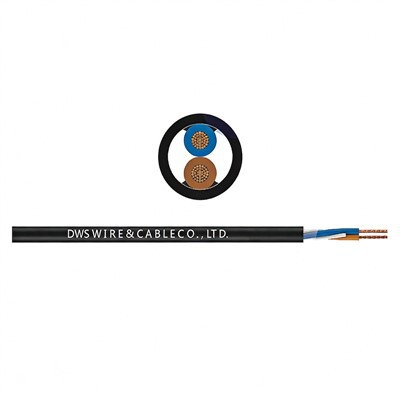
If you’re currently weighing multi-core flexible cables for your dynamic equipment, or you’ve been dealing with unexpected failures from a multi-core cable that won’t hold up, I can help. I’ve spent years testing these cables in real-world industrial conditions, and I can walk you through the tradeoffs, compare options, and even provide custom solutions if you need something tailored to your application. Let’s connect to review your project details, address any specific pain points you’re facing, and find the right cabling solution that balances performance and cost for your needs.
Coaxial Cable References:
- Industrial Equipment & Manufacturers Association. (2022). Total Cost of Ownership for Industrial Cabling Systems.
- Cable Technology Association. (2021). Dynamic Flexible Cable Fatigue Analysis Report.
- International Electrotechnical Commission. (2020). IEC 60227: Insulated Cables for Fixed Wiring.
Cixi Davos Wire & Cable Co., Ltd.
As one of the most professional multi core flexible cable manufacturers and suppliers in China, we also support customized service. Please feel free to buy bulk high quality multi core flexible cable in stock here from our factory. For price consultation, contact us.
Address: No.3, Lane 91, Ruan Ding Road, Linxi Village, Xiaolin Town, Cixi City
E-mail: roy798@163.com
WebSite: https://www.cj-supplychain.com/
