Hey there, I’m Jake—long story short, I’ve spent the last 8 years on the ground, designing, sourcing, and installing emergency bulkheads for everything from mid-sized commercial facilities to the ones that keep our power grid up and running. If you’ve ever scrolled through energy blogs or hung out in industry forums, you’ve probably stumbled on takes that make you go, “Wait, do power plants even use these things?” I get it—when you picture a nuclear plant or a fossil fuel power station, your mind jumps to massive turbines, smoke stacks, or control rooms with hundreds of blinking buttons. Emergency bulkheads aren’t exactly sexy, but they’re one of those quiet unsung heroes that keep critical assets from going sideways in a crisis. Let’s break this down like we’re chatting over a coffee (way less jargon, I promise). Emergency Bulkheads

First, let’s get one thing straight: emergency bulkheads in power plants aren’t the same as the flimsy plastic ones you grab to divide a garage or the ones in a cruise ship hallway. These are heavy-duty, engineered systems built to do one job really well: contain a problem before it spreads. Think about what a power plant deals with daily—high-pressure steam lines, volatile fuel sources, radioactive materials if we’re talking nuclear, tons of electrical current, and complex piping that runs through miles of walls and floors. A tiny leak in a steam line, for example, might not seem like a big deal at first, but if it’s in a room full of electrical transformers or a high-voltage switchgear bay? That leak can quickly turn into an explosion, a fire, or even a release of hazardous stuff. That’s where bulkheads come in. They act like a really strong, quick-closing door for entire rooms, corridors, or even sections of a power plant.
Let’s take nuclear power plants first, because that’s where people’s minds usually go when they hear “power plant safety.” The NRC (that’s the Nuclear Regulatory Commission for anyone who doesn’t know) requires every nuclear facility to have robust containment and separation systems to prevent a radiation release in case of an accident. Emergency bulkheads there are part of that system—they’re often called “isolation bulkheads” because they isolate different zones. For example, if a pipe in the reactor auxiliary building breaks, the bulkheads can seal that zone off in seconds (we’re talking 10 to 15 seconds, not minutes—speed matters here). These bulkheads are built to withstand not just pressure, but also heat, radiation, and even seismic activity. I’ve installed custom-fit steel bulkheads in a few new nuclear builds and retrofitted some older plants, and trust me—they’re not messing around. A lot of them have rubber or neoprene gaskets that inflate once the bulkhead is closed to create an airtight, watertight seal. That’s non-negotiable for anything handling radioactive materials—you don’t want a gap where gas can slip through.
Now, fossil fuel power plants, like coal, natural gas, or combined-cycle facilities, use these too, even if you don’t hear about them as much. Let’s think about a natural gas power plant—they have massive fuel tanks, gas lines running at high pressure, and areas with tons of electrical gear. If a gas line ruptures, you need to stop that gas from spreading to other parts of the plant where there’s an ignition source (like a spark from a transformer or a hot turbine). Emergency bulkheads here are usually fire-rated, pressure-resistant, and can close automatically if a gas detector or pressure sensor picks up a problem. I worked on a project at a 500MW natural gas plant in Texas a couple years back—they had a bulkhead that separated the main fuel supply corridor from the control room, and one time a small seal failed on a gas line. The sensor triggered, the bulkhead closed in 12 seconds, no one had to evacuate the control room, and the only damage was a $200 seal. That’s the kind of thing that makes my job worth it.
You might be wondering, “Wait, do power plants actually use them all the time, or just for emergencies?” Mostly, they’re tested regularly, not just for when things go wrong. Most facilities run monthly or quarterly drills where they close the bulkheads to make sure the seals work, the actuators don’t jam, and the sensors trigger on time. I’ve even had clients ask me for bulkheads that can be left partially open during normal operations—because power plants need to move people and materials around daily, you don’t want a permanent barrier that stops maintenance teams from getting from one part of the plant to another. So a lot of modern bulkheads are “manually operable when open, auto-close on alarm” type systems. That way, they’re out of the way when you need to get work done, and they drop into place in a crisis.
Now, let’s address a common misconception: some people think power plants rely solely on the big main containment structures (like the steel and concrete domes in nuclear plants) and don’t need smaller bulkheads. But that’s like saying a house only needs a front door and no interior walls. The main containment is for the worst-case scenario, but bulkheads are for containing smaller, more frequent incidents that could turn into disasters if they spread. For example, a small fire in a turbine hall—if you can seal that zone off, you contain the fire to one area, so the rest of the plant stays operational. That’s huge for power plants, because downtime costs millions of dollars an hour. A 2-hour outage at a large power plant can cost upwards of $10 million in lost revenue and grid fees. Emergency bulkheads aren’t just safety gear—they’re also a big part of keeping a plant running smoothly when something goes wrong.
I should also mention that not all bulkheads are the same. Some are steel, some are composite, some are manually cranked, some are hydraulic or electrical. It depends on the plant’s needs. For a nuclear plant, you need radiation-resistant materials that don’t degrade over 60+ years of operations. For a natural gas plant, you need fire-resistant materials that can handle 2,000°F heat for at least 2 hours. For a smaller backup power plant (the ones that hospitals or data centers use), you might need a more compact bulkhead that can be installed in a tight corridor. That’s where my team comes in—we don’t do one-size-fits-all. We work with plant engineers to survey their space, figure out their biggest risks (are they worried about gas leaks? Steam pressure? Seismic activity?), and build a bulkhead that fits their exact needs.
Wait, let’s talk about a recent example that proves how important these are. A couple years back, there was an incident at a coal power plant in the Midwest where a high-pressure steam line in the boiler room ruptured. The emergency bulkheads between the boiler room and the control room closed automatically within 10 seconds, containing the steam to the boiler zone. The control room stayed online, operators kept the plant stable, and the only downtime was 6 hours while they fixed the line. If that bulkhead hadn’t been there, the steam would’ve flooded the control room, knocked out all the computers, and caused a full shutdown that would’ve lasted weeks. That’s the kind of real-world impact these systems have. No one likes to talk about near-misses, but this one stuck with me because it showed that bulkheads aren’t just a regulation checkbox—they save plants from catastrophic, costly failures.
Now, let’s get into some of the behind-the-scenes stuff that plant operators care about. Maintenance. No one wants a piece of safety gear that’s a nightmare to upkeep. Modern emergency bulkheads are designed to be low-maintenance—most just need a quick check of the seals every 3 months, and a full test every year. We even provide a mobile app for our clients that lets them log tests, get reminders for maintenance, and troubleshoot any issues remotely. That’s a big deal for plant teams, who are already stretched thin keeping up with daily operations and regulatory requirements.
Another thing: compliance. Power plants have to meet a ton of federal, state, and industry standards. For nuclear plants, that’s NRC standards. For fossil fuel plants, that’s OSHA, NFPA, and EPA rules. Emergency bulkheads have to be tested and certified to meet those standards, which is why it’s so important to work with a supplier who knows the specific requirements for power plants. A lot of generic bulkheads out there don’t cut it for power plant use—they might not be fire-resistant enough, or they might not handle the pressure differentials that power plant zones have. That’s why we focus exclusively on industrial and power sector bulkheads—we know the standards, we’ve worked with the inspectors, and we make sure every bulkhead we install passes inspection on the first try.
I get it if you’re still on the fence. Maybe you’re a plant engineer who’s been weighing the cost of installing bulkheads against the risk of an incident. Let’s run the numbers: a standard bulkhead for a mid-sized power plant costs between $15,000 and $50,000, depending on size and features. Compare that to the $10 million an hour in downtime, or the $100 million+ in damage from a major incident. That’s a no-brainer. And with the supply chain being what it is these days, modern bulkheads can be ordered and installed in 4 to 6 weeks, not months, so you don’t have to wait around to add this critical layer of safety.
Here’s the thing I want all plant operators, engineers, and even anyone who uses power to know: emergency bulkheads in power plants aren’t overkill. They’re a proactive way to keep people safe, keep the lights on, and prevent small problems from turning into big disasters. I’ve been doing this long enough to see what happens when you skip these systems, and it’s never pretty. I’ve also seen how they work when they’re done right—saving jobs, saving money, and keeping communities powered.
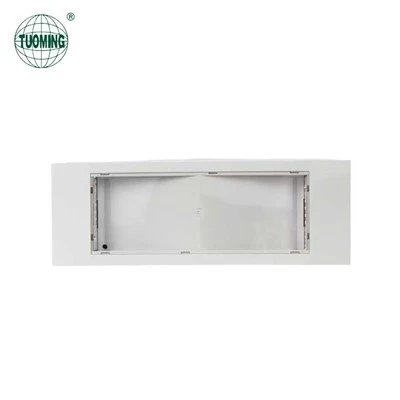
If you’re a power plant operator, maintenance manager, or engineer who’s looking to add bulkheads to your facility, or retrofit old ones to meet current standards, I’d be happy to chat. We can walk through your site, talk about your biggest risks, and put together a custom solution that fits your needs and your budget. You don’t have to work with a big, faceless corporation—we’re local enough to be on site within 48 hours for emergencies, and we only build what you actually need, no upselling or fine print. Reach out to our team to set up a time to talk through your project.
References
Emergency Downlight U.S. Nuclear Regulatory Commission. (2021). Containment Isolation Systems Requirements for Nuclear Power Plants.
National Fire Protection Association. (2022). NFPA 850: Standard for Fire Protection for Electric Generating Plants and High-Voltage Direct Current Converter Stations.
Electric Power Research Institute. (2020). Emergency Isolation Systems for Fossil Fuel Power Plants.
Zhongshan Tuoming Lighting Technology Co., Ltd.
As one of the leading emergency bulkheads manufacturers and suppliers in China, we warmly welcome you to buy advanced emergency bulkheads in stock here from our factory. All customized products are with high quality and low price.
Address: No.1, 10th Floor, No.17, Tongfu South Road, Guzhen Town, Zhongshan City, Guangdong Province
E-mail: 1989355847@qq.com
WebSite: https://www.tuominglight.com/
