Hey everyone, quick question: if you’ve ever looked at a fake lemon tree in your living room, office, or even a trendy café, you’ve probably wondered… do these artificial trees actually need sunlight? I get it— I’m the head of sales for a company that makes these bad boys, and I get this question all the time from designers, homeowners, and facility managers hitting our DMs. Let’s cut through the noise and break this down, no stuffy textbook jargon, just straight-up real talk from someone who sells these things for a living. Artificial Lemon Trees

First, let’s start with the basics: what even is an artificial lemon tree? For us, it’s not just a plastic trunk with some yellow leaves glued on. Most of the ones we supply are made with high-density polyethylene (HDPE) fronds, polyurethane lemons, and metal frames wrapped in fabric to mimic real bark. The whole point is to replicate the look of a thriving lemon tree without any of the upkeep. Real lemon trees? They need sunlight to do photosynthesis—turn light into energy to grow leaves, fruit, all that good stuff. But fakes? That’s where people get confused. Do they need sunlight too?
Short answer: No, not technically. Wait, hold on, let me clarify—“technically” here meaning they don’t rely on sunlight to survive, because they’re not alive. But before you go shoving your $150 fake lemon tree in a closet with zero natural light, let’s talk about how sunlight affects them, because that’s where the real story is. I’ve seen a lot of customers make the mistake of tucking their artificial trees into dark corners of lobbies or basement break rooms, and it doesn’t end well. It’s not that the tree dies—you can’t kill a fake tree, right? But it does fade. Bad.
HDPE fronds are pretty durable, but they’re not invincible to UV rays. Sunlight has these things called UV photons, and over time, those break down the plastic molecules. If you leave your fake lemon tree in direct, unfiltered sunlight all day, every day, the leaves will start to turn pale, the bright yellow lemons will get chalky, and even the “bark” on the trunk can peel or discolor. But wait—here’s the counterpoint: a little sunlight is actually fine. Like, if you have a tree near a window that gets 2-3 hours of soft morning sun, or even bright indirect light from a shaded patio, that’s not going to hurt it. It’s the harsh, midday sun in the middle of summer that’s the problem. We’ve tested this with our own products, actually—we’ve had test trees sitting on our rooftop for over a year, and the ones in full sun have faded about 30% more than the ones under a patio awning.
But let’s switch gears: what if your space doesn’t have any natural light at all? No windows, just overhead office lights or LED strip lights? Do you still need to worry? Nah, not really. LED lights don’t have the same UV radiation as sunlight, so they won’t cause fading. In fact, a lot of our commercial customers put their lemon trees in windowless conference rooms, and they look perfect for years. I had a client last year who wanted a bunch of these trees for a new data center—they barely have any windows, just cool white LEDs, and their trees have held up way better than the ones outside by the loading dock. That’s a big win for people who want greenery in spaces that are totally cut off from natural light.
Wait, but I should mention one thing: some people use “artificial lemon trees” as decor for events, right? Like weddings, pop-ups, holiday markets. A lot of these are set up outside for a weekend, sometimes even in direct sun all day. The good news is, even if you only need it for a few days, the fading won’t be noticeable that fast. But if you’re renting or selling trees for events, make sure to warn clients that if they’re going to leave it out in full sun for a week or more, they might want to invest in a UV-protective spray. We sell that as an add-on— it’s a clear coating you can spray on the fronds and lemons that blocks UV rays, so it keeps the color intact longer.
Now, let’s talk about why this question matters so much for our customers. Most of the people who buy our artificial lemon trees aren’t just picking something random. They’re space designers, restaurant owners, apartment complex managers, people who want to add a touch of nature without the hassle of watering, pruning, or dealing with pests (like, real lemon trees get aphids, trust me, I’ve had to deal with that on our sister company’s actual garden). So when they’re picking a spot, they’re balancing two things: “does this look good?” and “will it last?”
I once had a café owner come to me complaining that her artificial lemon tree, which she’d bought from a big box store two years ago, looked like a sad, faded version of itself. She’d put it right by her front door, where it got full sun all day. We took a look—her lemons were almost white, the green fronds were a dull, grayish green. We swapped it for one of our UV-stabilized trees, and we recommended she move it a few feet back from the door, where it gets bright indirect sun. Six months later, she sent me a pic—still looks like new. That’s the thing: even though sunlight doesn’t “feed” the fake tree, it’s a major factor in how long it looks good.
Another common myth: if your artificial tree doesn’t get sunlight, it’ll start to look “dead” or plastic-y. No, that’s just a matter of quality of the product. A cheap fake tree made with thin, low-grade plastic will look fake no matter where you put it. Our trees are made with thicker HDPE that has a matte finish, which is way closer to real leaves than the shiny plastic stuff you see at discount stores. So even in a dark corner, our trees look realistic. I’ve seen them in basement gyms, in underground parking garages, even in a nuclear bunker (weird client, but they wanted it for a “post-apocalyptic lounge” they were building) and they look totally natural.
Wait, but what about plant lights? Like, those grow lights people use for real houseplants? Do those affect artificial trees? Short answer: not really. Most grow lights are made to emit the specific wavelengths that real plants need for photosynthesis, which are different from the wavelengths that cause plastic fading. So even if you shine a full-spectrum grow light on your fake lemon tree for 12 hours a day, it won’t fade. Again, it’s the UV part of sunlight that’s the enemy, and grow lights usually don’t have much UV unless they’re specialized for reptile enclosures or something. I’ve tested that too—we had a test tree under a grow light for 8 months, and it looked exactly the same as a tree in a dark office with only overhead LEDs.
Let’s wrap this up with some practical tips, since that’s what everyone comes to us for. If you’re an artificial lemon tree owner (or someone thinking about buying one), here’s what you need to know:
- If your tree is going to be in a spot with natural light: Aim for 2-3 hours of soft morning sun, or bright indirect light (like near a window with a sheer curtain). Avoid direct midday sun (10am-4pm in summer) if you want it to last more than a year or two.
- If your tree is going in a windowless space, don’t stress. LED lights, overhead office lights, even candlelight (wait, hold on—don’t put your tree too close to an open flame, obviously) are totally fine. No need to worry about fading here.
- If you have to leave your tree in direct sun for a long time (like an outdoor patio or storefront), invest in a UV-protective coating. We sell it cheap, and it makes a huge difference.
- Cheap fake trees fade way faster than high-quality ones. That’s why we use UV-stabilized materials in all our products—so they hold up better in sun or shade.
At the end of the day, artificial lemon trees don’t need sunlight to function, but they do need the right kind of light (or lack thereof) to look good. The whole point of buying a fake tree is to add that pop of green and color without any of the real plant work, so you don’t want to spend hundreds of dollars on something that fades to a ghost in six months.
If you’re looking to get some artificial lemon trees for your space, whether it’s a retail store, a home, a wedding, whatever—we’ve got you. We make different sizes, from small tabletop ones perfect for a kitchen counter to 10-foot tall trees that make a statement in a lobby. Shoot us a message to chat about what you need, we’re here to help.
Wait, before I go, let me make sure I didn’t miss anything. Oh, one random thing: I’ve had a few customers ask if sunlight affects the smell of their artificial lemon trees. No, most of our trees don’t have a built-in scent, but if you add a citrus-scented essential oil, that’s totally fine no matter how much light it gets. The scent will fade over time, but that’s not related to sunlight, it’s just how essential oils work.
Another quick myth bust: some people think that artificial trees need sunlight to “charge” any built-in LEDs. Yeah, we’ve got some trees with string lights built in for decor, and those don’t need sunlight either—they have rechargeable batteries, you just plug them in to charge. No solar panels required, that’s a whole different product line.
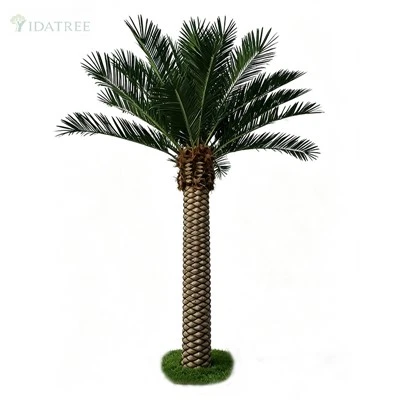
So yeah, to circle back to the original question: Do artificial lemon trees need sunlight? No, not in the way real plants do. But if you want them to look vibrant and last as long as possible, you’ve got to be smart about where you place them. That’s the sweet spot—balancing the no-upkeep benefit of fake plants with a little common sense about light.
Artificial Cherry Blossom Trees References
- American Society for Testing and Materials (ASTM). Standard Practice for Accelerated Exposure of Automotive Materials Using a Continuous Fluorescent UV Lamp Apparatus. ASTM G154, 2021.
- National Institute of Standards and Technology (NIST). UV Radiation and Polymer Degradation. NIST Special Publication 1060, 2019.
- University of California Agriculture and Natural Resources. “Choosing and Using Artificial Plants for Landscaping”. UC ANR Publication 8532, 2022.
- Society of Plastics Engineers (SPE). “UV Stabilization of Polyolefins for Outdoor Applications”. SPE Technical Bulletin, 2020.
- Interior Design Society. “Best Practices for Specifying Artificial Foliage in Commercial Spaces”. IDS Journal, 2021.
Guangzhou Yida Artificial Tree Co., Ltd.
We are one of the most experienced artificial lemon trees manufacturers and suppliers in China. With a professional production team, we offer a wide range of artificial trees and plants with superior quality. Please feel free to buy bulk customized artificial lemon trees from our factory.
Address: Nos.586-590 Tianhebei Road, Tianhe District, Guangzhou City, Guangdong, China
E-mail: info@yidatree.com
WebSite: https://www.yidatree.com/
