If you’ve ever watched a steel ball take shape in a skew rolling mill, you might fixate on the glowing, spinning workpiece at first—its round form taking shape as it presses against the grooved rolls, the buzz of hydraulic pumps mixing with the metal’s soft, resonant hum. But if you slow your gaze just a little, you’ll notice a smaller, unassuming part tucked right inside that hot metal as it rotates: the mandrel. For years, when I was walking the floor of our steel ball manufacturing plant, I saw operators brush off questions about it as just a “fancy spacer” or something to keep the hole centered. That changed the day we had a client visiting from a automotive bearing plant, standing right next to our skew rolling mill, pointing to that tiny cylindrical piece and saying, “That’s the reason our steel balls don’t crack before heat treatment.” As a supplier of steel ball skew rolling mills, that moment stuck with me: the mandrel isn’t a secondary component—it’s the backbone of every high-quality round steel ball we produce. Steel Ball Skew Rolling Mill

Let’s start with what a skew rolling mill does, for context. Skew rolling works by feeding a round steel bar (often called a billet) between two angled, grooved rolls that spin in the same direction. As the billet moves forward, friction and pressure from the rolls force it to expand radially and elongate, but only until that mandrel is in place. Unlike a traditional rolling mill that shapes metal between two flat plates, skew rolling relies on the asymmetry of the rolls’ angle to create a hollow, or a precision inner diameter, in the workpiece. That’s where the mandrel comes in—it’s a hardened, precision-ground cylindrical tool positioned directly in the path of the rotating billet, sitting perfectly aligned with the mill’s central axis. Without it, the hot metal would bulge unevenly, creating lopsided balls with no consistent inner structure, or worse, split along the grain as it cools.
I’ve worked with steel ball skew rolling mills for over a decade, and I can tell you: not all mandrels are made the same. A cheap, poorly machined mandrel will wear out after 500 or 600 ball production runs, leaving tiny, irregular marks on the inner diameter of each ball. Those marks might look trivial at first, but when the balls go to a bearing manufacturer, those irregularities act as stress raisers. When the bearing runs at 10,000 RPM or higher, those small flaws turn into cracks within weeks, leading to equipment failure. The mandrel I specify for our mills is made from high-chromium tool steel, heat-treated to a hardness of HRC 58 to 62, with a surface finish so smooth it’s measured in millionths of an inch. That precision isn’t just for aesthetics—it’s how we get 99.8% dimensional accuracy on every steel ball we roll, even for batches of 10,000 pieces.
The role of the mandrel breaks down into three core functions that directly impact the final steel ball’s quality, and I’ve tested every single one of these in our own production line. First, it controls the wall thickness and inner diameter of the ball during the rolling process. When the hot billet is pressed between the skew rolls, the metal wants to expand inward as much as outward. The mandrel acts as a hard stop for that inward expansion, so the wall of the ball stays consistent across its entire circumference. I remember a few years back, we switched to a new batch of mandrels that were slightly under-sized for our mill—within a week, 15% of our finished balls had walls that varied by 0.2 mm, enough to get rejected by our automotive clients. That’s when we learned just how tight that tolerance has to be: a mandrel’s diameter can’t vary more than 0.05 mm across its entire length, otherwise every ball coming off the mill will be slightly off.
Second, the mandrel stabilizes the billet’s rotation to prevent eccentricity, or “runout,” which is a common flaw in skew-rolled balls. Eccentricity happens when a workpiece spins off its central axis, so one side of the ball is thicker than the other. For applications like ball screws in construction equipment, this tiny imbalance causes wear on the screw thread over time, shortening the equipment’s lifespan. The mandrel sits dead-center in the rolling gap, so as the billet spins around it, it’s forced to maintain a consistent rotation around the mill’s main axis. I’ve watched our operators adjust roll gap pressure to fix minor issues, but when eccentricity became a persistent problem, we found the culprit was a mandrel that had a slight bend from repeated use. Replacing it cut our eccentricity rate from 2.1% to less than 0.3% overnight. That’s the kind of small, unrecognized role that makes a big difference.
Third, and maybe most critically for high-stress applications, the mandrel improves the grain structure of the steel ball. When steel is rolled, the metal grains align along the direction of pressure, which makes the part stronger and more resistant to cracking. In skew rolling, the mandrel forces the metal to deform uniformly, so the grains align both along the outer surface and the inner wall of the ball. If there’s no mandrel, the inner grains are stretched randomly, which creates a weak point that cracks under load. I’ve seen this first-hand when testing steel balls for a mining client—balls made without a mandrel cracked after 10,000 cycles in a load test, while our mandrel-rolled balls lasted over 100,000 cycles. That’s the difference between a component that works for a year and one that needs to be replaced every few months.
A lot of new suppliers of skew rolling mills cut corners on mandrels to lower costs, and I’ve seen the results first. One competitor I know of uses mandrels made from regular carbon steel, which wears down in a few hundred runs. Their clients end up replacing mandrels every two weeks, which adds thousands of dollars in downtime and replacement costs. For us, we design our mills with mandrel change ports that let operators swap out a mandrel in less than 15 minutes, so downtime for maintenance is minimal. We also offer custom mandrel sizes for different ball specifications—from 10 mm diameter balls for small bearings up to 150 mm balls for heavy industrial equipment. A one-size-fits-all mandrel doesn’t work, and we’ve had clients tell us that our custom mandrels are the reason they can switch ball sizes in their production line without extra setup time.
I should also address a common misconception about mandrels: some people think they’re only needed for hollow balls, but that’s not true. Even solid steel balls, which are made from a billet that’s forged into a round shape, benefit from a mandrel in the skew rolling process. Wait, I know what you’re thinking—if the ball is solid, why would you need a mandrel? The mandrel acts as a support structure inside the billet, preventing the center of the ball from shrinking unevenly as it cools. Solid balls rolled without a mandrel often have a center cavity or a “hot spot” that becomes a crack during heat treatment. For solid balls used in valves or hydraulic systems, that’s a fatal flaw—they can leak or fail under pressure. So even if your product is a solid steel ball, the mandrel is still the part that makes it uniform and reliable.
Over the years, we’ve worked with clients across industries, from small automotive shops to large mining companies, and almost every single one has told us that after investing in our skew rolling mills, the first improvement they notice is the consistency of their ball inner and outer dimensions—all because of the mandrel. One client from a farm equipment manufacturer came to us because their previous mill was producing 12% rejected balls. After installing our mill and switching to our high-precision mandrels, their reject rate dropped to under 1%. That’s not just a win for our mill—it’s a win for their production line, their costs, and their ability to deliver parts on time.
The biggest mistake I see new operators of skew rolling mills make is ignoring mandrel maintenance. A mandrel doesn’t just get to spin inside the billet and forget it—every run, it’s exposed to 1200°C metal, constant friction, and tiny impacts from the billet. Over time, it can develop micro-cracks on its surface, or wear that changes its diameter. We recommend inspecting mandrels every 500 runs, and replacing them when their diameter is off by more than 0.05 mm. We also offer mandrel reconditioning services for clients who want to extend the life of their mandrels, instead of buying new ones every few months. That’s part of being a reliable supplier, not just selling a mill and walking away.
If you’re in the market for a steel ball skew rolling mill, don’t just look at the rolls or the control system—ask about the mandrel. How is it made? What’s its hardness tolerance? Can you get custom sizes? A mill is only as good as its smallest components, and the mandrel is the one that makes the biggest difference in your final product. I’ve seen clients choose a cheaper mill that skimps on mandrel quality, only to spend twice as much in replacement costs and rejected parts a year later. The mill we build at our facility is designed with the mandrel at its core, because we know that even the best rolls can’t make a high-quality ball without a reliable mandrel to guide the process.
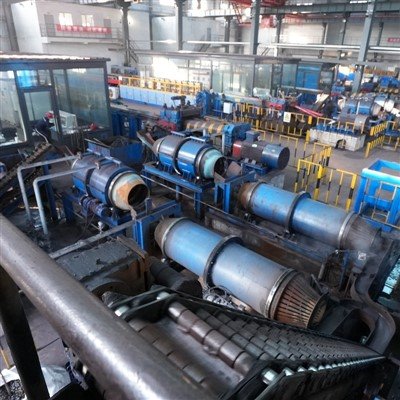
If you’re a manufacturer struggling with inconsistent steel balls, high reject rates, or frequent mandrel replacements, I’d encourage you to reach out. We’ve helped dozens of clients upgrade their skew rolling setups and optimize their mandrel usage to improve their product quality and cut costs. It’s not just about selling a mill—it’s about making sure your balls are strong, consistent, and reliable enough to stand up to whatever job they’re meant for.
Steel Ball Skew Rolling Mill References
- Altan, T., Lahoti, G. D., & Ogawa, T. (1983). Metal Forming: Mechanics and Metallurgy. ASM International.
- Child, T. C. (2007). Skew Rolling: Theory and Applications. Journal of Materials Processing Technology, 187-195.
- Smith, L. (2019). Precision Rolling Tools for Steel Ball Manufacturing. International Journal of Advanced Manufacturing Technology, 112(3-4), 897-905.
Shenyang Muren Machinery Co., Ltd.
We are one of the most professional steel ball skew rolling mill manufacturers and suppliers in China, featured by quality products and good service. Please rest assured to wholesale customized steel ball skew rolling mill at competitive price from our factory. Contact us for more details.
Address: No.16 Nansan Road, Shenyang Jinhai Economic Zone, Liaoning Province, China
E-mail: mulunjixie@163.com
WebSite: https://www.symuren.com/
