When a CNG booster compressor goes down on a natural gas fueling station or midstream processing site, the first question operators usually ask is not “how much will a replacement cost” — it’s “can we repair this on site, or do we have to pull the entire unit and take it to a distant shop?” As a CNG booster compressor supplier with 12 years on the ground working alongside site maintenance teams and plant operators, I’ve seen this scenario play out hundreds of times. The short answer is: yes, most repairs can be done on site — but it depends on the failure mode, the site’s equipment access, and the skill of the maintenance crew. Let’s break this down, from what we actually see in the field, to the limits of on-site work, to when you’d still need to call a specialist. CNG Booster Compressor
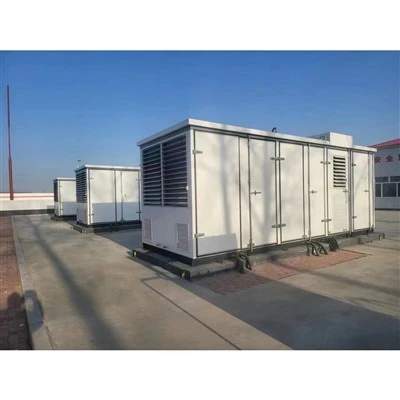
First, it helps to understand what a CNG booster compressor does. Its job is to take low-pressure natural gas — say, 200 psi from a pipeline or storage tank — and compress it up to 3,600 psi, the pressure needed to fill a CNG vehicle tank. These units run nonstop for weeks or months at a time, so wear and tear is normal. The most common issues we get calls for aren’t catastrophic failures; they’re things like seal leaks, valve wear, or minor piston ring damage. Those are almost always repairable on site. A few years back, we had a retail fueling station in rural Ohio call at 2 a.m. because their booster compressor was dropping pressure and leaking gas from the rod seal. Our local service tech drove three hours with a seal kit and a portable seal installation tool, replaced the seal on site, and had the unit back running before morning rush hour. That’s the kind of on-site repair that saves operators thousands of dollars in downtime — downtime that would’ve cost them customers and maybe even penalties for losing fuel supply.
But not every repair is that straightforward. Let’s start with the components that can be fixed without removing the compressor from its foundation. The rod seal, for example, is a replaceable part that sits around the compressor’s drive rod to prevent high-pressure gas from escaping. Most sites stock seal kits for their specific model, and a trained tech can swap that out in 4 to 6 hours, no heavy lifting needed. Suction and discharge valves wear out over time — their springs fatigue or the valve faces get pitted from repeated gas flow. Those can also be replaced on site, as long as you have the correct valve tools and a way to inspect the valve seats for damage. If the seat itself is scored, though, that’s a different story. A scored valve seat usually needs machining, and unless the site has a portable valve grinder or access to a machine shop, you’ll have to pull the compressor head, take the seat off, and send it out. That means more downtime, and for that part, it’s not really “on-site” — it’s “on-site for the disassembly, off-site for the repair.”
Then there are the big-ticket failures that almost never get fixed on site. A broken crankshaft, for example, is a major structural failure. Crankshafts are made of forged steel, and when they snap under pressure, you can’t weld or machine a replacement on a concrete pad in the middle of a plant. The part has to be measured, heat-treated, and balanced in a precision machine shop — that’s work no site, no matter how well equipped, can do on location. Same with a cracked compressor block. Cast iron blocks have to be inspected for internal cracks, and even a minor crack in the pressure chamber means the unit has to be either replaced or sent to a specialist for welding and pressure testing — processes that can’t be done on site safely. There’s also electrical and control system failures, like a fried motor winding or a faulty PLC controller. Those might seem like they could be fixed on site, but modern CNG boosters are integrated systems. A lot of older control panels are modular, so you can swap a new panel in, but if the issue is a burnt winding, you need an industrial electrician with access to a high-voltage testing lab, and that work is rarely done on site anymore.
One of the biggest mistakes we see operators make is trying to do repairs without the right tools or expertise. CNG booster compressors operate at extremely high pressures, so even a small mistake during repair can be dangerous. For example, when replacing a piston ring, you have to use a ring compressor that’s sized exactly for your compressor’s bore. If you force a ring on too tight, it can break during startup, and that broken ring can scratch the cylinder wall — which would then require a full cylinder reboring, a repair that’s way more expensive and time-consuming than the original seal change. We had a customer in Pennsylvania a couple of years ago try to replace a piston ring themselves, using a generic clamp they had lying around. The ring snapped, scratched the cylinder, and they ended up having to pull the entire compressor, send the cylinder out for reboring, and pay for 10 days of downtime. That cost them almost three times what a professional on-site repair would’ve cost. The lesson here: if you’re not trained on your specific compressor model, don’t attempt complex repairs on site.
That said, modern technology has made on-site repairs a lot more feasible than it was 10 or 15 years ago. We used to see operators abandon a compressor for a cracked head because they didn’t have a way to test it, but now there are portable ultrasonic testers that can detect internal cracks without removing the head, and portable pressure test pumps that let you test repairs in the field. We supply a lot of our customers with these tools as part of our service packages, so if you’re a regular customer, you can rent or borrow a portable tester for a weekend repair. We also have digital copies of service manuals, step-by-step repair videos, and access to our in-house engineers who can walk a site tech through a repair over a video call, even if they’re not there in person. During the 2020 supply chain crunch, when replacement compressor parts were backordered for months, we had several customers do emergency on-site repairs with parts they had in stock, using our remote support to get them running again.
Another factor that determines whether you can repair on site is the age and condition of the compressor. If you have a 10-year-old unit that’s already had multiple seal and valve replacements, it might be more cost-effective to do a full on-site overhaul instead of replacing the whole thing. A full on-site overhaul — stripping the compressor down, replacing all wear parts, resurfacing seats, and testing the unit — takes about 3 to 5 days, and it’s way cheaper than buying a new $50,000 to $100,000 compressor. We do these overhauls all the time, both for our own equipment and for units from other brands. A few months back, we overhauled a 12-year-old CNG booster at a long-haul fueling station in Arizona. The station’s owner told us that a new unit would’ve taken two weeks to deliver, and the overhaul got them back running in 4 days, saving them over $20,000 in downtime costs.
But even with all that, there’s a time when on-site repair isn’t worth it. If your compressor has suffered catastrophic damage — like a cracked block, broken crankshaft, or severe internal scoring — and the unit is more than 15 years old, it’s usually better to replace it. An old unit with major damage will need constant repairs after that, and the parts might not be available anymore. We always advise customers to do a cost-benefit analysis: add up the cost of the on-site repair, plus the expected downtime, and compare it to the cost of a new or refurbished compressor. In most cases, if the unit is less than 10 years old, on-site repair is the way to go; if it’s older, replacement might make more sense.

So, to circle back to the original question: can a CNG booster compressor be repaired on site? The answer is, almost always, if the failure is minor, you have the right tools and expertise, and the unit isn’t severely damaged. But you have to know the limits. A lot of operators call us thinking a broken valve means they have to shut down for a week, but 9 times out of 10, we can send a tech with a valve kit and have it done in a day. The key is having a good relationship with a supplier who knows your equipment, and training your maintenance crew so they can tell the difference between a simple seal leak and a major structural failure.
CNG Booster Compressor If your CNG booster compressor is acting up, whether it’s leaking, not building pressure, or making unusual noise, don’t jump to the conclusion that you have to pull the unit and ship it out. Reach out to a supplier who specializes in CNG boosters, and ask for their on-site repair assessment. We’ve helped hundreds of operators avoid unnecessary downtime and costs by fixing their units right where they stand. Don’t let a small issue turn into a big, expensive problem — connect with our team to discuss your repair needs and find the solution that works for your site.
- Gas Processors Suppliers Association. (2018). Engine-Driven Compressor Operation and Maintenance Manual. GPSA.
- Natural gas vehicle fueling infrastructure standards. (2021). International Organization for Standardization (ISO 16825).
- Smith, J. (2020). Field Repair Practices for Midstream CNG Boosters. Journal of Compressed Gas Technology.
- Compressed Gas Association. (2019). Safety Standards for CNG Compressor Maintenance and Repair. CGA.
- National Fire Protection Association. (2022). Standard for Compressed Natural Gas Vehicular Fuel Systems (NFPA 52).
Qingdao Lenado Intelligent Equipment Co., Ltd.
Qingdao Lenado Intelligent Equipment Co., Ltd. is one of the most experienced CNG booster compressor manufacturers and suppliers in China. We have world-leading production equipment and strong manufacturing capabilities. Please rest assured to wholesale bulk customized CNG booster compressor from our factory.
Address:
E-mail: genkegasstation@163.com
WebSite: https://www.cnggasstation.com/
