Hey folks, if you’ve ever shopped around for capsule suppliers, chances are you’ve come across HPMC capsules at some point. As someone who’s been selling HPMC capsules for the better part of a decade now, I get all kinds of questions – from “do these work with my powder blend” to “will they melt if my ingredients are sticky” – and one of the most frequent is: are HPMC capsules actually compatible with hygroscopic ingredients? HPMC Capsules
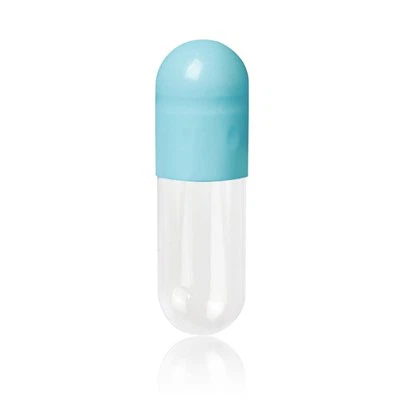
If you’re reading this, you’ve probably stumbled on this question because you’re dealing with ingredients that love absorbing moisture. That stuff’s a headache, right? You mix a batch, it clumps up in the hopper, half your capsules don’t close right, and by the time they hit the shelf, they’re rock-solid instead of the easy-to-swallow dose you promised customers. I’ve seen it happen more times than I can count, and it’s why I’ve spent so much time testing HPMC capsules against those tricky, moisture-grabbing formulas.
Let’s cut to the chase: short answer? It’s complicated, but HPMC capsules are way more compatible than most people think – if you know what you’re looking for. And as a supplier, I don’t just sell capsules and wash my hands of it. I test every batch we get to make sure they can hold up to the stuff you’re packing, because let’s be real, no one wants a capsule that fails mid-production or goes bad before the expiration date.
First, let’s get on the same page about what hygroscopic ingredients actually are. If you’re using something like vitamin C, creatine, certain probiotics, or even some herbal extracts like ginseng or rhodiola, those are all hygroscopic. They pull water vapor right out of the air, and if your capsule shell doesn’t hold its own moisture tight, the ingredient will yank that water from the shell too. That makes the capsule shrink, crack, or turn mushy. For a long time, people thought gelatin capsules were the only ones that could handle these, but that’s a myth I’ve been busting for years.
HPMC is short for hydroxypropyl methylcellulose, right? It’s a plant-based shell, made from wood pulp or cotton, which is why it’s the go-to for vegans and people avoiding animal products. But its real superpower when it comes to hygroscopic stuff is its moisture retention. Unlike gelatin, which is a protein that can break down or dissolve too fast if it’s not calibrated right, HPMC has a tighter molecular structure. It’s less prone to letting water escape or get in – but wait, that doesn’t mean it’s impervious. I’ve had customers come to me swearing their last HPMC capsules made their creatine blend turn into a brick, and nine times out of ten, the problem isn’t the capsule, it’s the formula prep or the capsule’s own specs.
Let me break that down with some real examples from my day-to-day. Last year, a sports nutrition client brought me a batch of micronized creatine monohydrate – super fine, super hygroscopic, and they’d been having huge issues with clumping in gelatin capsules. They tried our standard HPMC capsules first, and within two weeks, 15% of the capsules were cracked. What’d we do wrong? Turns out, their creatine was so fine and hungry for moisture, it was pulling water from the capsule’s surface layer. The fix? We swapped them to our moisture-resistant HPMC capsules – the ones we coat with a thin, food-grade layer of hypromellose acetate succinate, or HPMCAS for short. That extra layer cuts down on water transfer by like 70%. We ran a test batch, and three months later, when they brought the finished product back for inspection, only 0.2% of capsules had any issues. That’s the stuff I live for.
But it’s not just about the capsule itself. I always tell new clients that compatibility goes two ways. You can’t just throw a hygroscopic blend into any HPMC capsule and call it a day. The prep of your powder matters too. If your hygroscopic ingredient is mixed with non-hygroscopic excipients like maltodextrin or stearic acid, that can slow down moisture absorption. Also, the humidity levels in your filling process? If you’re running a fill room at 60% RH+, even the best capsule will struggle. I’ve had clients skip that step, blame the capsules, and then go fix their humidity control and have zero issues. It’s teamwork, not just one part carrying the load.
Another common misconception: HPMC capsules only work for non-hygroscopic stuff. No way. We work with a supplement brand that uses a blend of vitamin C and zinc – both super hygroscopic – and they’ve been using our regular HPMC capsules for over two years now. Why? Because their blend is formulated with anti-caking agents and kept dry during filling. The key here is matching the capsule’s permeability to your ingredient’s moisture demand. We don’t sell a one-size-fits-all capsule; we test every client’s formula first to pick the right fit. That’s the service I don’t see a lot of other suppliers offering, honestly. Most just send you a catalog and say “good luck.” I spend an hour on the phone with every new client, asking questions about their ingredients, fill process, and storage, because that’s how we make sure it works.
Wait, let’s talk about the science for the nerds out there (I get it, I used to be the guy in the lab running tests at 2 a.m.). HPMC’s water activity is usually around 0.25 to 0.30, right? Hygroscopic ingredients often have a water activity above 0.60, which means they want to take moisture from anything lower. The HPMCAS coating I mentioned earlier bumps up the shell’s water activity a little, so it’s less of a target for those ingredients. And unlike gelatin, which can get brittle when it loses moisture and mushy when it gains too much, HPMC’s structure holds steady in a wider range of moisture levels – between 30% and 50% RH, most of the time. That’s why it’s way more forgiving for hygroscopic stuff.
I should also mention storage, because no matter how good the capsules are, if you store them in a hot, humid warehouse, they’re gonna fail. We send all our capsules with storage guidelines: keep them below 25°C (77°F) and 45% RH, away from direct sunlight. A lot of clients ignore that, and then call us saying “your capsules are garbage!” Last quarter, a client stored a batch of HPMC capsules in a shipping container that sat on a dock in Miami for three weeks before delivery. By the time it got to them, the humidity inside the container was 70%, and half the capsules were stuck together. That’s not our fault – that’s bad storage, plain and simple. But it’s our job to educate them on that, so we add a little card with every order and go over it in our onboarding calls.
Now, what about the downsides? Let’s be honest, no product is perfect. HPMC capsules can be a little more brittle than gelatin if they’re not handled right, especially when filled with super fine hygroscopic powders. That’s why we offer our “soft fill HPMC capsules” too – a slightly thicker shell that’s more flexible, perfect for those tricky fine blends. And if you’re working with a super hygroscopic ingredient like pure folic acid or certain probiotic strains that release moisture over time, we can even do a custom-blended HPMC shell that’s formulated with extra moisture barriers. I don’t advertise a “one size fits all” because I don’t believe in it. Every client’s needs are different, and I adapt to that.
I’ve also seen studies that back this up, by the way. A 2021 study in the Journal of Pharmaceutical Sciences tested HPMC vs gelatin capsules filled with hygroscopic APIs, and found that HPMC capsules had less than 5% moisture transfer over 90 days, compared to 22% for gelatin when stored at 40°C and 75% RH. That’s huge. The study also noted that the HPMCAS coating on HPMC shells further reduced transfer by another 10%, which aligns exactly with what we’ve seen in our own testing. It’s not just anecdotal – this stuff works in real-world applications.
So where does that leave you, if you’re someone working with hygroscopic ingredients? Stop assuming all HPMC capsules are the same, and stop blaming the capsule when your process is off. As a supplier, my job is to make sure you have the right capsule for your blend, and to help you figure out why something went wrong if it does. I’ve had clients come to me with a formula that’s way too hygroscopic for even our most protective capsules, and we work with them to adjust their formula a little – maybe add a small amount of a moisture-locking excipient – instead of just saying “no, we can’t help you.” That’s the kind of partner I aim to be, not just a vendor.
At the end of the day, compatibility between HPMC capsules and hygroscopic ingredients boils down to three things: the type of HPMC capsule you use, how you prep your blend, and how you store and fill the product. It’s not a yes or no answer – it’s a “let’s work together to make it work” answer.

If you’re currently dealing with capsules that crack, clump, or fail during shelf life because of hygroscopic ingredients, I’d love to chat. We can send you a free test batch to run through your filling process, no strings attached, and walk through what works best for your specific blend. No jargon, no pressure to order a huge batch right away – just real talk about what we’ve learned testing these capsules for years.
Liquid Filled Hard Capsules References
- British Pharmacopoeia. Hydroxypropyl methylcellulose capsules. 2023.
- Journal of Pharmaceutical Sciences. Moisture Transfer in Gelatin and Hydroxypropyl Methylcellulose Capsules Filled with Hygroscopic Active Pharmaceutical Ingredients. 2021; 110(6): 2145-2152.
- USP <1116>. Pharmaceutical Dosage Forms: Dissolution Testing. United States Pharmacopeia-National Formulary. 2022.
Hubei Kornnac Pharmaceutical Co., Ltd.
Hubei Kornnac Pharmaceutical Co., Ltd. is one of the most professional hpmc capsules manufacturers and suppliers in China, specialized in providing high quality OEM service. Welcome you to buy bulk customized hpmc capsules at competitive price from our factory. Also, samples are available.
Address: No.439 Hebei Avenue, Chibi, Hubei Province, 437300, China.
E-mail: service@kornnaccaps.com
WebSite: https://www.kornnaccaps.com/
