If you’ve ever been part of a manufacturing line, a chemical processing plant, or even a maintenance shop working on heavy machinery, you’ve probably seen an O-ring. They’re those small, circular rubber or plastic parts that look unassuming, but they’re the unsung heroes of almost every sealed system—they stop leaks, keep contaminants out, and keep operations running smoothly. I’m an O-ring supplier, and for 12 years now, I’ve talked to engineers, maintenance managers, and machine operators every single day who’ve had to deal with an O-ring failure. More often than not, that failure isn’t because the part was low-quality or poorly installed—it’s because the O-ring wasn’t compatible with the chemicals it was exposed to. That’s the gap I see a lot of folks miss: O-ring chemical compatibility isn’t just a “nice-to-have” detail—it’s the reason a system runs for 10 years or shuts down in 10 days. O-Ring

Let’s break this down simply, because I’ve seen so many people overcomplicate it with jargon when it’s really just a matter of what materials play nice together. An O-ring is made of a specific elastomer (that’s just a fancy word for rubber-like material, including synthetic rubbers and thermoplastics), and each elastomer has a unique chemical “personality.” When you pair it with the wrong chemical, two bad things can happen: either the O-ring swells, softens, and loses its shape (that’s called “swelling” or “degradation from softening”), or it hardens, cracks, and becomes brittle (called “compression set” or “chemical embrittlement”). Both lead to leaks, downtime, and in some cases, safety hazards—like in pharmaceutical manufacturing where a leak could contaminate a batch, or in a chemical plant where a seal failure could spill hazardous materials.
I’ll walk you through the basics here, but the key takeaway I want to share as a supplier is that chemical compatibility isn’t a one-size-fits-all number. It’s a conversation. Let’s start with why it matters. Say you have a hydraulic system in a construction truck. The hydraulic fluid is a petroleum-based oil. If you use a natural rubber O-ring, that rubber will swell up—like a sponge left in water, but way worse. It’ll bloat past the groove it’s supposed to sit in, leak fluid, and the system will stop working mid-job. Now, if you use a nitrile rubber (NBR) O-ring, which is our most popular for hydraulic fluids, that nitrile won’t swell—so it seals correctly, lasts for years. But flip that: if you take that same nitrile O-ring and expose it to acetone, a strong solvent, the acetone will break down the nitrile’s molecular structure. The O-ring will soften, lose its tensile strength, and within a few hundred cycles, it’ll split.
Another example: we had a customer in the food and beverage industry last year who came to us with a problem. They were using silicone O-rings in their beverage dispensing lines, and after a month, the O-rings were cracking. They assumed silicone was food-safe, so it should work for their mild, sugar-based syrups—turns out, the problem wasn’t the syrup, it was a mild alkaline cleaner they used after every shift. Silicone is great for steam and high temperatures, but it’s not compatible with alkaline solutions at elevated temperatures. We swapped them for EPDM O-rings, which handle alkalines well, and their failures stopped. That’s exactly why I stress to every new customer: tell us every chemical the O-ring will touch, not just the main one. The cleaners, the coolants, even the small traces of other fluids that might splash on it—those all matter.
Now, let’s talk about the science behind why this happens, because understanding it helps avoid mistakes. Elastomers are long chains of molecules called polymers. Each polymer has a specific structure, and chemicals interact with those chains in different ways. When a chemical is compatible with the elastomer, the chemical molecules might slip a little between the polymer chains, which actually makes the O-ring more flexible (that’s why good compatibility can sometimes make a seal perform better, as long as it doesn’t swell too much). When it’s incompatible, one of two things happens: either the chemical dissolves parts of the polymer chains (called “chemical attack”), breaking them down and leaving the O-ring brittle, or the chemical becomes trapped between the chains, pushing them apart and making the O-ring swell. Swelling isn’t just a size issue—when an O-ring swells beyond its designed dimensions, it can’t hold the proper compression on the sealing surfaces, so leaks start. If it swells too much, the O-ring can extrude out of its groove, tearing itself apart.
Temperature is another piece of the puzzle that people forget. Chemical compatibility isn’t static—how a chemical interacts with an O-ring changes with heat or cold. For example, fluorocarbon (Viton) O-rings are excellent for acids and solvents at room temperature, but if you heat that system to 300°F, some acids that were mild at room temp will start to break down the Viton. Conversely, cold temperatures can make even compatible chemicals have a different effect: oil that works fine on a nitrile O-ring at 70°F can make the nitrile stiffen and crack at -20°F. That’s why we always ask for the operating temperature range too—it’s as important as the chemicals.
I’ve seen customers try to cut corners here too. A machine operator might grab a generic O-ring from a hardware store instead of ordering the right one for their specific chemical mix, because it’s $0.50 cheaper. That’s a false economy. I talked to a refinery customer last quarter who told me that 10 years ago, they spent $1,200 on generic O-rings for a high-pressure chemical line. Those O-rings failed every 30 days, costing them $15,000 in downtime and emergency repairs each time. They switched to O-rings matched to their chemical compatibility needs, and now those O-rings last 18 months. The $2 each O-ring (way more than the generic) ended up saving them hundreds of thousands of dollars in a year. That’s the story I love to share, because it’s real—it’s not just about the price of the part, it’s about what it costs when it fails.
So, how do you actually check O-ring chemical compatibility? It’s not just a chart you find online, and I’ll tell you straight up—some of those online charts are outdated or only test a narrow range of chemicals. The best way is to work with a supplier who has tested elastomers under real-world conditions. We test our O-rings in dozens of chemicals, at different temperatures, to get accurate performance data. But even beyond that, for unique applications (like a custom chemical blend or a specific operating environment), we do compatibility testing: we expose a sample O-ring to the exact chemical it will see, at the exact temperature and pressure it will operate at, then measure its change in size (swell rate), hardness, tensile strength, and elongation. A swell rate of less than 10% is generally acceptable for most applications—any more than that, and you’re looking at seal failure. Hardness change is also key: if an O-ring gets 10 points softer (from 70 Shore A to 60 Shore A, for example), it won’t seal properly. If it gets 10 points harder, it’s too brittle to flex.
Let’s cover some common elastomers and their key chemical compatibility, because that’s a quick reference I use every day. Nitrile (NBR) is the workhorse for petroleum-based oils, fuels, and hydraulic fluids. It’s not great for polar solvents like acetone or ketones, though. EPDM is perfect for water, steam, and alkaline solutions—think washing machines, cooling systems, and dairy equipment. It’s terrible for oils and fuels, though, so you’d never use it in a gas line. Silicone is great for food contact, high temperatures, and general inertness, but bad for alkalines, acids, and most solvents. Fluorocarbon (Viton) is the heavy hitter for harsh chemicals, acids, and high temperatures, but it’s more expensive and doesn’t work well with ketones or amines. Then there are thermoplastics like PTFE, which is almost universally chemically resistant, but it’s harder than elastomers, so it needs a different design to seal properly.
I should also mention pressure and dynamic vs. static applications. A static seal (like a cover plate that doesn’t move) is less demanding than a dynamic seal (like a pump shaft that spins) because the dynamic seal has to flex every cycle. So a chemical that’s only slightly incompatible might work in a static seal for a few years, but will fail quickly in a dynamic seal. That’s another detail we ask about—how the O-ring is moving, if at all.
Now, I don’t want to make this sound like every O-ring failure is avoidable with the right compatibility check. There are edge cases, and sometimes a customer’s application has a mix of chemicals that no single elastomer handles perfectly. In those cases, we can suggest custom formulations, or even secondary coatings on the O-ring to add extra chemical resistance. For example, if you have a mix of mild oil and a small amount of solvent, we can make a nitrile O-ring with a PTFE coating to handle the solvent without losing the oil resistance nitrile provides. That’s the kind of tailored solution you can’t get from a generic supplier—you need someone who will listen to your specific needs, not just push a standard product.
Let me circle back to the customer story I started with. That food and beverage company? They were in a bind because a shutdown in their bottling line would cost $20,000 an hour. When they came to us, they told us the exact cleaner they used, the alkalinity level of the cleaner, the operating temperature of the line, and that the O-ring was dynamic. We recommended EPDM O-rings coated with a food-grade silicone layer to resist the cleaner, and we shipped them the same day. They installed them, and six months later, they called to say not a single O-ring had failed. That’s why I do this job: it’s not just selling parts, it’s solving problems.
A lot of people in the industry treat O-rings as a commodity, but they’re not. They’re a critical component that makes every system work. The chemical compatibility check is the single most important factor in making sure that component works as long as it should. Skipping that step is like buying a raincoat without checking if it’s waterproof—you’ll get wet.
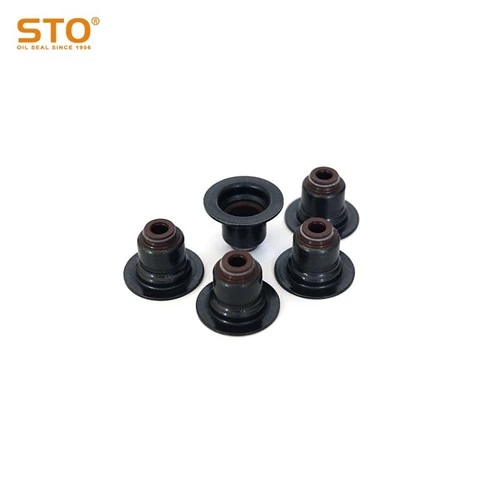
If you’re dealing with O-ring failures, or you’re planning a new system and want to make sure your seals don’t let you down, don’t guess. Don’t rely on a generic online chart. Reach out, tell us the chemicals your O-rings will be exposed to, the operating temperatures, whether the seal is static or dynamic, and what your downtime budget is. We’ll help you pick the right elastomer, or test a custom solution, to keep your system running smoothly.
Oil Seal When it comes to O-ring chemical compatibility, the best practice is simple: be specific, test real conditions, and partner with a supplier who cares more about your success than making a one-time sale. That’s the approach we take every day, and it’s why our customers come back, year after year.
References
- Society of Automotive Engineers (SAE) International. "Elastomer Compatibility Guidelines for Automotive Fluid Systems." SAE J200, 2021.
- Rubber Manufacturers Association (RMA). "Understanding Elastomer Chemical Resistance for Sealing Applications." RMA Technical Bulletin TB 007, 2019.
- DuPont Performance Elastomers. "Fluorocarbon Elastomer Chemical Resistance Guide for Industrial Seals." 2022.
- Food and Drug Administration (FDA). "Guidance for Industry: Elastomeric Sealing Components for Food and Beverage Contact." 2020.
- Parker Hannifin Corporation. "O-Ring Compatibility Handbook, 8th Edition." 2018.
Xingtai Boshuo Auto Technology Co., Ltd.
Xingtai Boshuo Auto Technology Co., Ltd. is one of the most professional o-ring manufacturers and suppliers in China, featured by quality products and low price. Please rest assured to wholesale bulk customized o-ring made in China here from our factory. Welcome to contact us for pricelist and free sample.
Address: No. 58 Quannan East Street, Xiangdu District, Xingtai City, Hebei Province
E-mail: sherry1@bs-belt.com
WebSite: https://www.bsbelts.com/
