If you’ve ever purchased PP woven bags for industrial, agricultural, retail, or commercial use, you’ve probably wondered: “What is the minimum order quantity (MOQ) for specific PP woven bags?” As a supplier that’s specialized in custom and standard PP woven bags for over a decade, I get this question at least three times a week—from small farm owners needing 50 bags to large construction companies placing bulk annual orders. The truth is, MOQ isn’t a random number we pull from a hat; it’s tied to production costs, material specifications, and the unique customization needs that make PP woven bags so versatile for different use cases. Let’s break this down simply, based on what I’ve seen work for our clients and our manufacturing team. Specific PP Woven Bags

First, let’s start with the basics: what are specific PP woven bags, anyway? These aren’t generic, off-the-shelf bags you grab from a local hardware store. “Specific” means they’re tailored to your exact needs—different sizes, strengths, printing, liners, or treatments to hold specific items. For example, a PP woven bag for holding animal feed needs to be tear-resistant and printed with the brand’s feed blend info, while a bag for cement needs a moisture-resistant liner to keep the powder dry. Even a small tweak to a bag’s specs changes how we produce it, which directly impacts MOQ.
Let’s talk about standard, non-customized specific PP woven bags first. If you don’t need printing, a special liner, or a unique size, our baseline MOQ is 500 units. Wait, that’s lower than some competitors—why? Because we invested in flexible production lines a few years ago, instead of sticking to large-batch only equipment. For our standard 25kg PP woven grain bags, 50kg construction aggregate bags, or 10kg seed bags that don’t need branding or special treatments, we can run a small, efficient batch without jacking up the cost per unit. I’ll admit, early in my career, I used to refuse orders for less than 1,000 bags because we thought small batches weren’t worth the setup time. But I had a small family farm client in Iowa who needed 300 bags to hold their new crop of sunflower seeds, and they promised to order more the next year. That turned into a 10,000-unit annual order, so I learned that small, reliable clients matter as much as big ones. The 500-unit MOQ for standard bags works because the setup for a standard roll of PP fabric is quick—we don’t have to adjust printing machines or add liners, so the cost spread over 500 bags is manageable.
Now, the part that most people get confused about: customized specific PP woven bags. This is where MOQ starts to shift, and it all comes down to the extra steps we take to make the bag unique for you. Let’s break down each customization and how it impacts MOQ:
First, printing. If you want your logo, product info, or barcodes printed on the bag, we use flexible rotogravure printing for PP woven bags. Each print run requires creating custom rollers for your design, which costs a few hundred dollars. To spread that roller cost across units, we need a higher MOQ. For one-color printing (most common for small brand logos), our MOQ is 1,000 units. For two or more colors, it jumps to 2,000 units—because each additional color means an extra roller and more setup time for the printing machine. I remember a local feed store owner who wanted 500 bags with their new brand design. We quoted them $2.50 per bag, which was way higher than our standard $0.40 per bag for unprinted 500-unit orders. They pushed back at first, but once we explained that the print rollers alone cost $800, the math made sense—if we did 500 bags, that $800 was split over every bag, making each more expensive. For 1,000 bags, that $800 roller cost is half as much per bag, so the total price dropped significantly. That client ended up ordering 2,000 bags the next year when they expanded their line, so it worked out for both of us.
Next, special treatments and liners. If your bags need to hold moisture-prone items like cement, fertilizer, or pet food, we add a polyethylene (PE) liner inside the PP woven fabric. Liners require a separate process of inserting them into each bag, and while small batches are possible, the labor adds up. Our MOQ for bags with PE liners is 1,500 units. We also offer UV-stabilized PP woven bags for outdoor use—like holding landscaping materials, or for export to regions with intense sun. UV stabilization adds a chemical to the PP resin during production, which changes the melting point of the material and requires longer run times for the batch. For UV-stabilized bags, our MOQ is 2,000 units. Another special treatment is antistatic bags for holding chemicals or electronic parts—these require specific additives that can’t be mixed in small batches, so our MOQ for antistatic specific PP woven bags is 2,500 units.
Then there’s the variable of bag size and strength. PP woven bags come in different gsm (grams per square meter) for the fabric, and different dimensions to hold different weights. For example, a 5kg seed bag is smaller and uses a lighter 70 gsm fabric, while a 50kg construction sand bag uses a heavier 120 gsm fabric. The heavier gsm fabric is thicker and more durable, but it requires more power to run through the weaving machines, so small batches of heavy gsm bags aren’t as cost-effective. For bags over 100 gsm, our MOQ is 1,500 units, regardless of other customizations. For extra-large bags—like the ones used to hold large bales of hay or construction debris, which can be 1.5 meters tall or more—our MOQ jumps to 3,000 units because they require special weaving adjustments and take up more space on production rolls.
Wait, but what about clients who need even smaller batches? I get this question a lot from small businesses or hobbyists, like craft sellers who use PP woven bags to package their handmade goods, or small contractors who only need a few hundred bags for a one-time job. A few years ago, we created a “small-batch express” line for clients with orders under our standard MOQ, but with a little extra cost per unit. For any order between 100 and 500 units, regardless of specs, we offer this service at a 30% markup over our standard pricing. It’s not our most profitable line, but it’s a way to serve clients who don’t need thousands of bags. I’d rather have a client come to us for their small order first, and then their bulk order later, than turn them away entirely.
Now, let’s talk about exceptions. There are times when we’ll lower MOQ even for custom orders, if it makes sense for both parties. For example, if a new client is testing a new product and wants to run a small market trial—say, a bakery that wants 500 custom-printed PP woven bags to hold their fresh sourdough—we’ll often waive the extra markup or lower the MOQ to 500 units, because there’s a chance they’ll scale up once they see demand. We also work with nonprofits and small agricultural co-ops, who often have limited budgets. Last year, we worked with a regional co-op that needed 700 bags to hold organic produce for a local food bank; we set MOQ at 500 units and cut the price by 20% to help them out. That co-op now orders 15,000 bags a year, so it’s a long-term investment that paid off.
It’s also important to note that MOQ can vary slightly based on current production capacity. If our team is slow and has unused machine time, we might be flexible with MOQ. If we’re running at full capacity to fill a big order for a national hardware chain, we’ll have to stick to our standard MOQs because we can’t adjust our production schedule for small orders. That’s why it’s always good to reach out early—even if you’re not ready to place an order yet, letting us know your needs a few weeks in advance gives us time to adjust our production plan.
I’ve seen clients get frustrated when they hear MOQ numbers, and I get it—small budgets or one-time jobs don’t always fit into big batch requirements. But here’s the thing about specific PP woven bags: they’re not a commodity. The work we put into your exact specs, whether it’s printing your logo, adding a liner, or adjusting the strength to hold your product, has real costs. If we made 100 custom-printed bags, the cost of the print rollers, labor, and setup would be so high that each bag would cost 10 times more than it should. That’s not helpful to anyone, because no one can afford that price. Our MOQs are set to balance quality, affordability, and reliability for both us and our clients.
Let me give you a real example from last quarter. A landscaping contractor reached out asking for 800 UV-stabilized, custom-printed PP woven bags to hold decorative stone. Our standard MOQ for UV-stabilized bags is 2,000 units, so I quoted them a price that worked out to $1.20 per bag for 800 units, with the small-batch markup. They came back and said another supplier quoted them $0.80 per bag for 1,000 units. I didn’t panic—because I knew what that $0.80 per bag price hid. That supplier probably used cheaper, lower-quality PP resin that won’t hold up to sun, or skipped the full UV stabilization, or would deliver bags with blurry, smudged printing. Those bags would tear within a month of being outside, and the printing would fade after a few weeks. Our client would have to reorder twice as often, which would end up costing them more in the long run. I explained that to them, and they ended up placing the order with us for 800 units, and then ordered another 1,200 units two months later when they ran out. That’s the value of MOQs—they ensure we can deliver a quality product that lasts.
So, to sum up, the minimum order quantity for specific PP woven bags depends on three main factors: 1) whether you need standard unprinted bags, which have a 500-unit MOQ; 2) the customizations you need (printing, liners, UV stabilization), which push MOQ up to 1,000–2,500 units; and 3) the size and strength of the bag, which can add another 500–1,000 units to the MOQ. We also offer a small-batch option for orders under 500 units, with a 30% markup, and we’re flexible for new clients testing products or nonprofits with tight budgets.
If you’re not sure what MOQ works for your needs, the best thing to do is reach out with your specific requirements—whether that’s bag size, weight capacity, printing, liners, or any other details. We can send you a custom quote with MOQ and pricing tailored to your project, no pressure. Our team has over a decade of experience working with all kinds of clients, from small farmers to large national brands, and we’ll help you find a solution that fits your budget and needs, without sacrificing quality.
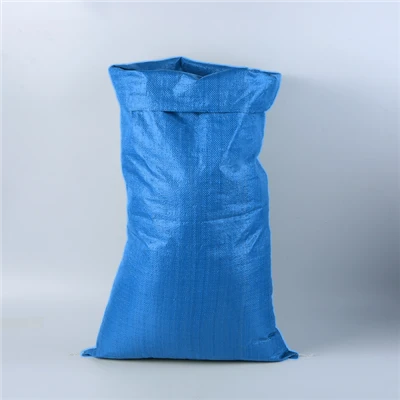
Ready to talk through your specific PP woven bag order? Reach out to our team to discuss your needs, ask any questions about MOQ, or get a personalized quote. We’re here to help you get the right bags for your project, at a price that works for you.
Colorful PP Woven Bags References
- PP Woven Bag Manufacturing: Production Processes and Cost Drivers, Industrial Packaging Association, 2022.
- Flexible Packaging MOQ Trends for Custom Orders, Global PP Packaging Report, 2023.
- Small-Batch Production Solutions for Specialty Packaging, National Association of Manufacturers, 2021.
Linyi Dongyi Import&Export Co., Ltd.
As one of the most professional specific pp woven bags manufacturers and suppliers in China, we offer a wide range of products with superior quality. We warmly welcome you to wholesale bulk customized specific pp woven bags from our factory. If you have any enquiry about quotation, please feel free to email us.
Address: 4 F, Zone A, Zhangjia Zhuxu Village, Lanshan District, Linyi City.
E-mail: donglai01972@gmail.com
WebSite: https://www.donglaipack.com/
