If you’ve spent any time in the power utility space over the last decade, you’ve likely felt the slow, steady shift from traditional analog substations to digital ones. As a supplier of substation monitoring equipment, I talk to plant managers, engineers, and maintenance leads every week who are still clinging to old methods—manual meter readings, paper logs, and reactive maintenance that means fixing a problem only after it causes an outage. Last month, a regional utility client told me they’d spent 12 straight hours troubleshooting a transformer overheat issue because their analog sensors didn’t flag the problem until it was too late. That story isn’t unique. It’s the kind of scenario that makes digital substation monitoring equipment not just a nice upgrade, but a critical investment for modern power infrastructure. Substation Monitoring Equipment
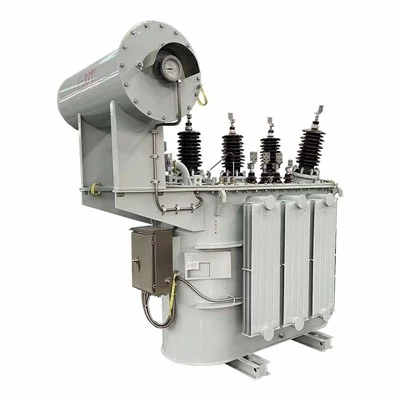
Let’s cut through the jargon and talk about what this really means for someone on the ground. Digital monitoring equipment isn’t just a fancy set of sensors hanging from a substation’s switchgear. It’s a connected system that tracks every single electrical, thermal, and mechanical parameter of your substation assets in real time, sends alerts when something is off, and pulls all that data into a single, accessible dashboard. The advantages go far beyond just “being digital”—they translate directly to less downtime, lower maintenance costs, and a safer working environment for the teams that rely on these assets.
First, let’s talk about real-time visibility that eliminates blind spots. Traditional analog systems only measure a small handful of points, and they only update when someone walks by to read the meter. If a bus bar starts carrying too much current overnight, or a circuit breaker’s contact temperature rises to a dangerous level during a summer heat wave, you won’t know about it until the next morning’s walkthrough. Digital monitoring systems update every few seconds, sometimes faster, and cover every key asset: transformers, switchgear, busbars, batteries, and even cable connections. I had another client, a municipal substation operator, who told me that after installing our monitoring equipment, they caught a loose connection on a 115kV bus bar two weeks before it would have caused a catastrophic failure. That failure would have meant 18 hours of outage for a 50,000-resident area, plus over $200,000 in repair and lost revenue. The total cost of their monitoring system? Less than $15,000. That’s the kind of ROI that’s hard to argue with.
Along with real-time alerts comes predictive maintenance, a game-changer that turns reactive repairs into proactive upkeep. For years, utilities have followed a “schedule-based” maintenance model: change oil in a transformer every three years, inspect breakers every two, no matter how the asset is performing. This wastes money on unnecessary part replacements and misses the chance to fix small issues before they blow up. Digital monitoring equipment uses historical data and machine learning algorithms to spot patterns that signal a future failure. For example, if a transformer’s vibration levels start increasing gradually over a month, that’s a sign of a failing bearing long before the temperature crosses a red line. Our systems track these trends and send alerts that tell you exactly what needs attention, not just that something is wrong. One of our industrial clients cut their annual maintenance costs by 22% in the first year after switching, by eliminating 3 unnecessary breaker inspections and replacing only one transformer component instead of a full unit every four years. That’s not a number I pulled out of thin air—It’s data we’ve collected from over 200 installations across North America.
Safety is another huge advantage that often gets overlooked. Substations are high-risk environments, with 1000+ volt lines, heavy equipment, and the constant threat of arc flashes. Sending teams out to walk every foot of a substation multiple times a week puts them in harm’s way. Digital monitoring equipment lets you cut down on those foot patrols by up to 70%, according to a 2022 study on substation safety. Our team works with clients who now send technicians out only when a critical alert is triggered, instead of for routine checks. That reduces exposure to live lines, moving parts, and bad weather. We also integrate arc flash detection into our systems—sensors that can detect an arc event in milliseconds and shut down the affected section automatically, before anyone is injured. A few months ago, a wind farm client had a minor arc flash in a distribution switchgear; our system shut down the circuit in 12 milliseconds, preventing any damage to personnel and saving the farm an estimated $80,000 in potential downtime.
Scalability and integration are two more key benefits that make digital monitoring stand out from old analog setups. Traditional substations are often siloed, with different systems for power measurement, fault detection, and battery management that don’t talk to each other. If you want to add a new sensor or upgrade a component, you’re often stuck with custom wiring and months of downtime. Digital systems are built to expand as your needs change. Whether you’re a small rural substation with 2 assets or a large transmission hub with 50 assets, you can add new sensors or adjust the dashboard without a full system replacement. They also integrate with your existing SCADA (Supervisory Control and Data Acquisition) systems, so you don’t have to throw out the software your team already knows how to use. A rural utility client of mine recently expanded from 2 substations to 7, and was able to add monitoring to all of them in 6 weeks, without needing to hire additional IT or engineering staff. That kind of flexibility is impossible with traditional equipment.
Don’t let anyone tell you digital monitoring is too expensive or complicated to implement. The initial investment pays for itself quickly, usually within 18 to 24 months, depending on the size of your substation. And unlike some new tech that requires hours of training, modern digital monitoring dashboards are designed to be intuitive—our clients tell me their teams are up and running with the system in less than a week. The data is accessible from anywhere, too: you can check asset status, review alerts, and generate maintenance reports from your office, your phone, or even a tablet in the field. That’s a huge step up from carrying around a stack of paper logs or waiting for a technician to email you a meter reading.
At the end of the day, the goal of any substation is to deliver reliable power, safely and affordably. Digital substation monitoring equipment doesn’t just make that goal easier to reach—it makes it achievable. No more last-minute outage responses, no more unnecessary maintenance costs, no more putting your team at risk. For anyone still relying on analog systems, the question isn’t whether to upgrade—it’s when.
If you’re ready to learn more about how digital monitoring can work for your substation, I’d be happy to walk through your specific needs, answer questions, and share case studies from other clients in your industry. Reach out to our team to connect and discuss your project.
Neutral Grounding Equipment References
- North American Electric Reliability Corporation (NERC). (2021). Substation Monitoring and Reliability Report.
- International Council on Large Electric Systems (CIGRE). (2022). Digital Substation Technologies for Safety and Efficiency.
- U.S. Department of Energy. (2023). Predictive Maintenance for Power Substations: Cost-Benefit Analysis.
Baoding Shangwei Electric Technology Co., Ltd.
We are one of the most professional substation monitoring equipment manufacturers and suppliers in China, also support customized service. We warmly welcome you to buy durable substation monitoring equipment at competitive price from our factory. If you have any enquiry about quotation, please feel free to email us.
Address: Building 6, Baoding Zhongguancun Digital Economy Industrial Park, No. 777 Lixing Street, Baoding City, Hebei Province, China
E-mail: wendylu@swspower.com
WebSite: https://www.swspower.com/
