As a supplier specializing in fire cabinet manufacturing lines, I’ve spent over a decade working directly with production managers, line supervisors, and quality teams across North America and Europe. One of the most common questions I get during site visits and initial consultations is: “What performance indicators actually matter for a fire cabinet line—not just generic manufacturing metrics, but ones that tie directly to compliance, durability, and real-world fire safety?” This isn’t a trivial question. Fire cabinets aren’t just metal boxes; they’re critical for housing fire extinguishers, fire hoses, and other life safety equipment, so a manufacturing line’s performance can’t be measured the same way as a line making office furniture or consumer electronics. Fire Cabinet Manufacturing Line

Over the years, I’ve learned that reliable performance for a fire cabinet line falls into four core, interconnected buckets: compliance adherence, output consistency, quality reliability, and operational efficiency. Each bucket has specific, actionable metrics that don’t just sound good on a dashboard—they prevent costly reworks, missed regulatory deadlines, and, most importantly, deliver a product that will perform when it matters most. Let’s break these down, with context from the lines we install and support every month.
First, compliance adherence is non-negotiable for fire cabinets, so its metrics can’t be treated as afterthoughts. The global and regional standards for fire cabinets are clear: NFPA 10 (US) for extinguisher cabinets, BS 5452 (UK) for hose cabinets, AS 2444 (Australia), and ISO 7010 for labeling and durability. The single most important indicator here is compliance pass rate for mandatory third-party testing. Unlike a line testing a sample once a quarter, a fire cabinet line that’s performing well will have a 100% pass rate on every required test—every time. I’ve seen lines cut corners on material thickness (required for impact resistance) or seam welding strength, which leads to third-party auditors flagging batches, costing customers weeks of downtime and thousands of dollars in rework. Another key compliance metric is label and marking accuracy. Fire cabinets require specific, legible labels indicating certification, model number, and maintenance instructions—lines with high performance will have a 99.5% or higher label accuracy rate, as even a mislabeled cabinet can fail inspection during a building’s annual fire safety audit.
Next, output consistency for a fire cabinet line isn’t just about how many units it makes per hour—it’s about making units that fit and function exactly the same, batch after batch. The two big metrics here are first-pass yield (FPY) and batch-to-batch dimensional consistency. First-pass yield, unlike overall line yield which scrapes units at the end, measures how many units pass all checks without rework. For fire cabinets, a strong FPY is 95% or higher, because even a minor flaw in a door hinge or a misaligned mounting bracket means the cabinet can’t be installed properly, leaving it unusable. I once worked with a customer whose line had an 82% FPY because their sheet metal cutting machine was drifting 1mm per shift—they were fixing it by grinding edges after welding, which added 20 minutes per unit and meant half their output required rework. Batch-to-batch dimensional consistency is measured by the coefficient of variation (CV) for key dimensions: cabinet opening width, door thickness, and mounting hole spacing. A CV under 1% is standard for high-performing lines, because fire cabinets must fit a specific extinguisher or hose size, and inconsistent dimensions mean they won’t comply with NFPA or ISO standards.
Quality reliability goes hand-in-hand with compliance, but it focuses on the real-world performance of the finished cabinet, not just regulatory tests. The most impactful metric here is field failure rate, measured in terms of units returned or failed inspection within the first 12 months of installation. For a well-performing fire cabinet line, this rate is less than 0.2%—meaning only 2 out of every 1,000 units need attention within the first year. This is a big deal because a failed fire cabinet could mean life-saving equipment isn’t accessible during a fire. Another quality metric is impact test durability, which we test during line audits by running 5lb impact tests on the cabinet door (simulating a tool being dropped during installation) and counting how many doors dent or crack. High-performing lines will have a 0% failure rate on these tests, as even a small dent can compromise the cabinet’s ability to protect equipment inside.
Finally, operational efficiency for a fire cabinet line balances speed with quality—you don’t want to rush production and sacrifice compliance. The key metrics here are line uptime and changeover time between cabinet models. Line uptime, defined as the percentage of scheduled production time the line is actively running, is critical because fire cabinets have seasonal demand spikes—construction projects often order 200+ cabinets in a single week. A line with 90% or higher uptime can handle these spikes without falling behind schedule. Changeover time is how long it takes to switch between making, say, a 10lb extinguisher cabinet and a 50lb hose cabinet. For high-performing lines, this is under 30 minutes, which means a small manufacturer can take on custom orders without losing valuable production time. I’ve seen lines with 2-hour changeover times lose out on 30% of potential business because customers would rather work with a supplier who can adjust their line quickly.
Now, I want to share a real example to make this concrete. Last year, we installed a fire cabinet line for a mid-sized manufacturer in Ohio that had been struggling to keep up with orders and failed a third-party audit. Their old line had an 88% compliance pass rate, 81% FPY, 1.8% field failure rate, and only 72% uptime. We adjusted their process to include automated dimensional checks after welding, a monthly calibration schedule for their cutting machine, and a dedicated compliance inspector on every shift. Six months later, their metrics shifted: 100% compliance pass rate, 96% FPY, 0.12% field failure rate, and 94% uptime. They increased their monthly output by 40% and landed three large construction contracts because their products now met national safety standards.
This example shows that these performance indicators aren’t just numbers—they translate to revenue, compliance, and, most importantly, peace of mind for customers. A fire cabinet line that performs well isn’t just fast; it’s consistent, compliant, and built to last. If you’re a production manager looking to upgrade your line, or a business owner looking to launch a fire cabinet product line, the right performance metrics will help you avoid the common pitfalls that so many manufacturers face: cutting corners on material thickness, skipping regular calibration, or treating quality as an afterthought.
At the end of the day, fire cabinets are all about reliability. When a building catches fire, no one wants to worry that the cabinet housing the fire hose will crumple or the extinguisher won’t fit. That’s why the performance indicators for a fire cabinet line are so specific—they’re not about making the cheapest unit, they’re about making the safest unit, every single time.
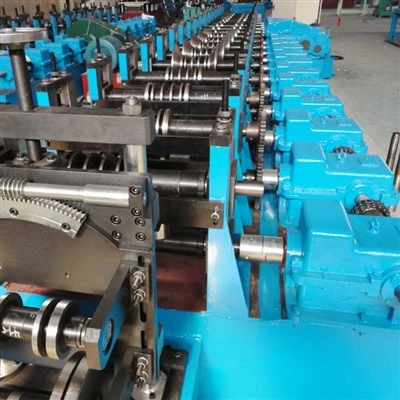
If you’re ready to review your current line’s performance or explore a new fire cabinet manufacturing line that aligns with these critical indicators, I’m here to help. We work with manufacturers across the globe to design, install, and support lines that meet all regional safety standards while maximizing output and efficiency.
Electrical Cabinet Profile Production Line References
- National Fire Protection Association (NFPA). 2022. Standard for Portable Fire Extinguishers (NFPA 10). Quincy, MA: NFPA.
- British Standards Institution (BSI). 2019. Specification for Fire Extinguisher Cabinets and Hose Reel Cabinets (BS 5452). London: BSI.
- International Organization for Standardization (ISO). 2020. Fire Safety Signs – General Design Principles for Signs (ISO 7010). Geneva: ISO.
- Manufacturing Extension Partnership (MEP). 2021. Metrics for High-Volume, Regulated Manufacturing Lines. Washington, DC: U.S. Department of Commerce.
Weifang Yue Jun Machinery Co., Ltd.
With abundant experience, we are one of the most professional fire cabinet manufacturing line manufacturers in China. We warmly welcome you to buy durable fire cabinet manufacturing line made in China here from our factory. We also accept customized orders.
Address: Kuiwen District, Weifang City, Shandong Province
E-mail: adrian@yuejunmachinery.com
WebSite: https://www.yuejunmachinery.com/
