As the owner of a mid-sized PVC granules manufacturing facility based in the Midwest, I’ve spent the last 12 years watching global demand for our product swing through cycles of boom and quiet shift. Right now, I’m sitting at my desk staring at a 10-foot shelf of export trade data that just came in from our freight forwarder, and I’ll be honest: the export opportunities for PVC granules aren’t just there—they’re waiting, if you know where to look and how to position your product. Let’s cut through the generic industry reports and talk about what’s actually happening on the ground, from a guy who ships 15 semi-trucks of granules a week and fields 100+ cold emails from overseas buyers every month. PVC Granules
First, let’s start with the basics that no one in industry conferences likes to admit: PVC isn’t the “toxic plastic villain” headlines make it out to be. The old stereotypes—leaching chemicals, single-use waste—have been updated a lot in the last decade, thanks to both product innovation and global regulatory shifts that actually reward quality. That’s the first piece of good news for exporters: many of the high-growth regions right now are the same places that have strict environmental rules, which means they’re not just buying cheap, low-grade PVC scraps from developing nations—they’re paying premium for consistent, compliant resin that meets local safety standards.
Take Southeast Asia, for example. I just closed a deal last month with a small pipe manufacturer in Vietnam that’s been working with a local PVC producer, but they told me they were getting 2% more defective product every shipment than they’d agreed to. The plant in Vietnam is operating at 70% capacity because their local feedstock can’t keep up with rising demand for water infrastructure projects, which the Asian Development Bank estimates will need $1.5 trillion in funding over the next decade. That’s a huge gap. PVC pipes are perfect for water mains—they’re corrosion-resistant, cheaper than metal, and last 50+ years when they’re made with the right formulation. The problem? Local producers in Southeast Asia often rely on imported feedstocks, and many of them don’t have access to the advanced compounding equipment we use at our plant that lets us customize granules for specific applications. I don’t just sell PVC resin—I sell granules that are pre-blended with UV stabilizers for outdoor pipe extrusion, or impact modifiers for window frames that don’t crack in monsoon-season humidity. That’s a value add most low-cost exporters don’t offer.
Another region that’s blowing up? Sub-Saharan Africa. I used to think the market there was just for 1-cent plastic toys, but two years ago, I met a procurement manager from a Kenyan lighting company at a trade show in Dubai. They were switching from glass bulbs to LED fixtures with PVC housings, and they needed granules that wouldn’t warp in 110-degree heat, wouldn’t fade after 2 years of direct sunlight, and met EU RoHS standards because they export the bulbs to Europe. The local PVC available in Nairobi was too brittle and had inconsistent color, so they were paying 30% more for shipments from the Middle East. We adjusted our product: added a heat stabilizer package tailored to their specific climate, tested it in our in-house weather chamber for 1,000 hours of UV exposure, and shipped a small trial batch. They placed a 500-ton order 3 months later. That’s the kind of opportunity that doesn’t show up on generic export trend charts—its specific application needs that only quality suppliers can meet.
But wait, before you load up a container and send it to Ghana, let’s talk about the elephant in the room: regulatory compliance. This isn’t the 1990s, when you could dump a load of recycled PVC scrap with high lead content anywhere in the world. The EU’s REACH regulation, the US EPA’s TSCA updates, and even China’s new “Green Plastics” guidelines have made it so that if your PVC granules have excessive heavy metals or phthalates, you can forget about exporting to major markets. I learned that the hard way in 2018, when I tried to sell a batch of low-grade scrap to a buyer in India and got a cease-and-desist notice from the Indian Central Pollution Control Board 2 weeks after the shipment arrived. We had to pay to send the whole lot back, plus $12,000 in customs fees. That experience made us invest $200,000 in a third-party testing lab on-site, so every batch we produce has a COA (Certificate of Analysis) that lists every additive, every metal content, and meets or exceeds all global standards. That’s a non-negotiable now. Buyers in export markets don’t just want a price—they want proof that your product won’t get stuck in customs or banned after delivery.
Now, what about the segments of the market that are often overlooked? Medical and automotive. I know, PVC for medical supplies sounds obvious, but most medical-grade PVC is made with virgin resin, right? Not exactly. We developed a compound last year that uses 30% post-industrial recycled PVC, but still meets USP Class VI standards for IV bags and tubing. A hospital equipment manufacturer in Mexico reached out to us because their previous supplier could only offer either expensive virgin medical-grade or low-grade recycled that wasn’t approved for patient use. We sent them a sample of our recycled-compound medical-grade granules, and they just placed a 1,200-ton annual contract. That’s a win-win: they get a lower cost material, we’re diverting post-industrial scrap from landfills, and we’re accessing a market that’s less saturated than general-purpose PVC.
Automotive is another underrated space. The shift to electric vehicles (EVs) has created a huge demand for PVC granules that are flame-retardant, low-smoke, and resistant to battery coolant. Traditional automotive PVC used for door panels and wiring is no longer enough for EVs, which require materials that can handle higher voltages and extreme temperatures. European and North American EV manufacturers are moving their supply chains to closer regions, but many of their tier-1 suppliers are still struggling to find consistent compounded granules that meet their EV-specific specs. We currently supply 3 tier-1 auto parts makers in Poland with our flame-retardant PVC granules, and they told us last quarter that they’re looking to increase orders by 40% this year because their main customer is a German EV startup that’s ramping up production.
Of course, it’s not all smooth sailing. There are big barriers to entry. First, shipping costs for bulk PVC granules aren’t cheap—over the last 18 months, freight from the US Gulf Coast to Southeast Asia has gone up 45%, thanks to global container shortages. That means you can’t compete on price with producers in the Middle East, where energy costs (the biggest input for PVC production) are 60% lower than in the US. So that’s why differentiation is key. If you’re just selling generic white PVC granules, you’ll lose to a Middle Eastern supplier every time. But if you’re selling granules customized for a specific application, with a certified supply chain, and reliable on-time delivery, you can charge 10-15% more and still win bids.
Another barrier is trade tariffs. The US has a 25% tariff on imported PVC products from China, which has actually opened up a small window for North American exporters to sell into Latin America, where manufacturers used to buy cheap Chinese PVC. Now, many of those buyers are looking for alternative suppliers because of tariffs, and they’re willing to pay a bit more for reliable North American product. I’ve seen a 20% jump in inquiries from Brazil and Argentina in the last year, specifically for PVC granules for construction and packaging, because buyers there don’t want to deal with the supply chain delays from Chinese suppliers.
So, what does this all mean for a PVC granules supplier like me (and you, if you’re in the same boat)? Let’s break down actionable steps, not just vague “go global” advice. First, audit your product line. If you only make general-purpose PVC, start developing 2-3 custom blends for high-growth applications: UV-stabilized for outdoor construction, flame-retardant for automotive/electronics, low-lead for medical use. You don’t have to reinvent the wheel—most compounding adjustments are small, just adding specific stabilizers or modifiers that your existing equipment can handle.
Second, get third-party certifications. I mentioned REACH, TSCA, USP Class VI—those aren’t just fancy letters. Display them on your website, include a free COA with every trial shipment, and don’t cut corners on testing. A buyer in Vietnam told me last year that they receive 10+ quotes a week from suppliers, and the first thing they do is filter out anyone who can’t provide a full set of compliance documents. If you’re missing a key certification, partner with a testing lab to get it—its cost will pay for itself in the first few export deals.
Third, target the right markets, not just the ones with the biggest population. Southeast Asia and Sub-Saharan Africa are growing fast, but also look at regions with upcoming infrastructure projects: the Middle East’s 2030 Vision has $1 trillion in planned construction, and their local PVC production only meets 40% of demand. Eastern Europe, with its new EU accession pipeline and growing automotive manufacturing, is another untapped spot. Don’t waste time on markets where local producers can meet demand and offer lower prices—focus on markets with unmet specific needs.
Fourth, build relationships with local distributors, not just buyers. When I first started exporting, I would sell directly to small manufacturers in Dubai, but that meant I had to handle all the logistics, customs, and local compliance. Last year, I partnered with a distributor in Thailand who knows the market, handles all the local paperwork, and takes care of on-time delivery. They have 15 years of experience in plastic materials, and they understand what local buyers need. This cut our sales time per lead in half, because the distributor is already trusted by the buyers.
Wait, let’s circle back to that “toxic plastic” stigma, because I know some of you are thinking about that. It’s true that PVC has a waste problem, but the industry is moving fast on circular solutions. We now buy 25% of our post-industrial scrap from local manufacturers, melt it down, re-compound it, and sell it as recycled-content PVC granules. For buyers looking to meet their ESG goals, that’s a huge selling point. A packaging company in Germany recently chose our recycled-content PVC granules over a competitor’s virgin material because they could count the recycled content towards their corporate sustainability targets. That’s a market that’s only going to grow as more companies tie their procurement to ESG metrics.
I’ll be honest, 10 years ago, I never thought I’d be writing about ESG and EVs as core opportunities for PVC granules. I thought the future was all bio-plastics, and PVC would fade away. But here we are: PVC is still one of the most versatile, cost-effective plastics on the planet, and the global demand for high-quality, compliant, application-specific granules is only going up. The key is to stop seeing PVC as a commodity, and start seeing it as a custom material that can solve specific problems for buyers around the world.
If you’re a PVC granules supplier reading this, or a buyer looking for a reliable partner, let’s talk. I get hundreds of inquiries a month, but the ones that stand out are from people who know what they need, and who are looking for a long-term partner, not just a one-off shipment. We have capacity to grow, we have the certifications, and we know how to navigate the global trade landscape to get product to where it needs to be, on time and on spec.
As an industry, we’ve spent too long competing on price instead of value. The export opportunities for PVC granules are out there—we just have to stop selling “plastic pellets” and start selling solutions. That’s the lesson I’ve learned over the last 12 years, and it’s the reason our export sales have grown 18% every year for the last 5 years. It’s not rocket science, but it takes focus, flexibility, and a willingness to adapt to what the global market actually needs, not what we think it should need.
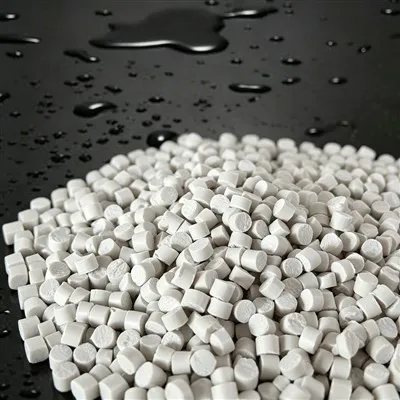
Now, let’s make this clear: if you’re a global buyer looking for PVC granules that meet your specific application needs, compliance standards, and delivery timelines, we’re here to discuss how we can support your operations. Reach out, and let’s build a partnership that works for both of us.
PPR Pipe References:
- Asian Development Bank. (2023). Southeast Asia Infrastructure Outlook: Water Sector Investment Needs.
- European Chemical Agency (ECHA). (2024). REACH Regulation Compliance Requirements for Plastic Exporters.
- International Energy Agency (IEA). (2023). Global PVC Market Trends: Feedstock and Demand Dynamics.
- US Environmental Protection Agency (EPA). (2022). TSCA Updates for Industrial Plastic Materials.
- Global EV Outlook 2024. International Energy Agency.
Hebei Ruijie Pipe Industry Co., Ltd.
Hebei Ruijie Pipe Industry Co., Ltd. is one of the most experienced PVC granules manufacturers and suppliers in China. With a professional production team, we are able to meet the needs of the majority of our customers. Welcome to wholesale high quality PVC granules in stock here from our factory. Contact us for pricelist and free sample.
Address: Industrial Park, Shaozhuang Township, Suning County, Cangzhou City, Hebei Province
E-mail: 1987870474@qq.com
WebSite: https://www.rjpprpipe.com/
