Alright, let’s cut to the chase—if you’re a hydraulic system owner, operator, or even a small-time supplier (like us), you know that a “works on the bench” hydraulic setup can turn into a headache on-site if you skip real testing. We’ve seen it too many times: a customer’s new system arrives, they hook it up, and half the valves jam or pressure drops out the second it’s under load. That’s why we built our testing process to be more than just “turn it on and cross your fingers”—it’s step-by-step, no fluff, and it’s what keeps our clients coming back. Let’s walk through exactly how we test every hydraulic system we ship, so you can either do it right yourself or know what to ask your supplier. Hydraulic System

First off, let’s start with prep because you can’t test a dirty system. Hydraulics are finicky—tiny bits of metal or dust will clog a $1000 valve faster than you can say “fluid flush.” Here’s our rule: before you even hook up the power, check the fluid level and condition. We use a cheap, disposable fluid test strip (not just the dipstick) to look for water contamination, which is a silent killer. If it’s milky, we dump it and start fresh. Also, bleed the lines before turning anything on—air in the system causes spongy movement or pressure spikes that damage pumps. We also make sure all fittings are tightened to the right torque (no over-tightening! That strips threads fast) and filter the fluid with a 10-micron filter as we fill the reservoir. No cutting corners here—prep saves you 10x the work later.
Next, we do a no-load function test. This is like warming up your car before a road trip—you don’t rev the engine to 5k RPM first, right? For hydraulics, we run the pump at 50% of its rated speed for 10 minutes, letting it circulate fluid without moving any actuators (cylinders, motors, etc.). What are we looking for here? First, the pump’s noise—if it’s screaming or making a grinding sound, that’s air in the lines or a worn part we missed. Second, the reservoir’s temperature—after 10 minutes, it should be around 100°F max. If it’s hotter, that means there’s internal leak or restricted flow. We also check for external leaks during this step—drips from fittings or seals that won’t show up under load. Any leak, even a tiny one, gets fixed before we move on.
Once that’s good, we move to pressure testing. This is the real meat of the test—most failures happen when pressure hits operating levels. First, we set the system’s pressure relief valve to 110% of its rated max (never 100%—that’s a crash waiting to happen). Then, we cycle each actuator slowly: extend a cylinder all the way, retract it, do that 5 times. What’s the red flag here? If the cylinder moves slower than the rated speed, that’s either a pressure loss or a leak. For rotary motors, we run them at full speed for a minute—check for speed consistency and noise. We also use a digital pressure gauge (not the analog ones that lie) to log pressure at each step: when the actuator hits the end of its stroke, pressure should spike to the relief valve setting, not drop or surge. If it surges, that’s air still in the lines—we go back and bleed more. If it drops, there’s an internal seal leak.
Wait, we also do a load test, and not just any load—we use a hydraulic load tester (think: a calibrated resistive load) to push the system to its actual working load for 30 minutes straight. This is where we simulate what the system will do on-site. For example, if it’s a system for a excavator, we simulate lifting a 10,000-pound bucket. During this test, we monitor three things closely: 1) Pressure consistency—shouldn’t fluctuate more than 5% from the rated working pressure. 2) Temperature rise—shouldn’t go over 140°F after 30 minutes (if it does, the cooling system (radiator, cooler) is undersized or there’s a worn pump). 3) Actuator smoothness—no jerky movement, no stalls. If any of these are off, we take it apart and fix it before shipping. We once had a client skip this test and their system failed on day one because the pump couldn’t hold pressure under full load—we fixed it no questions asked, but they lost a day of work. That’s why load testing is non-negotiable for us.
We also do electrical and control testing, because hydraulics don’t run on magic—they run on solenoids, relays, and wiring. For electric hydraulic systems, we check voltage at every component: the pump motor, solenoid valves, pressure switches. If the voltage is too low (more than 5% drop from rated), that will cause the solenoids to not engage fully, leading to slow valve operation. We cycle all the control inputs—push the button, flip the switch, use the remote (if it’s wireless) 20 times—to make sure there’s no lag or missed inputs. For systems with safety features (like emergency stops), we test that too—hit the E-stop mid-cycle, the system should shut down instantly, no residual movement. No exceptions here—safety is built in during testing, not added later.
Last but not least, we document everything. Every pressure reading, every temperature, every leak we fixed, every adjustment we made. We give that test sheet to the client when we ship the system. Why? Because if something goes wrong on-site, you can compare the real-time readings to our pre-shipment test data and pinpoint the issue fast. We once had a client call us saying their system was “dead” when they hooked it up—they cross-referenced our test sheet, noticed the pressure was 0, and traced it back to a loose power connection. That saved them a service call and a ton of downtime.
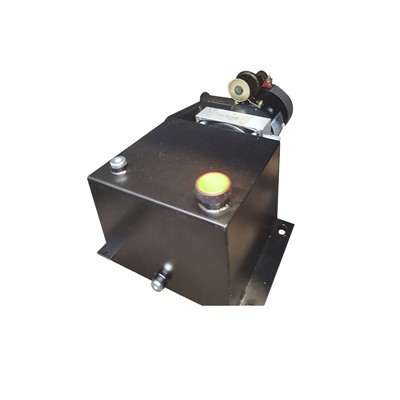
Here’s the thing: if you’re not doing these steps, your hydraulic system’s lifespan is going to be way shorter than it should be, and you’re risking costly downtime. If you’re working with a hydraulic supplier, make sure they do all these tests too. If they just load it on a truck without testing, run. We don’t do that—we’ve built our reputation on systems that pass every test before they leave our shop, because we know how important reliability is for your work.
Welded Hydraulic Cylinder If you’re looking for a hydraulic system that’s tested to stand up to real jobs, or you need help troubleshooting a system that’s not performing right, reach out to our team for a chat. We don’t do sales pitches—we talk through your needs, answer your questions, and make sure you get exactly what works for you.
References
- Hydraulic System Design and Testing Guidelines, National Fluid Power Association, 2021.
- Fluid Power Technology: Testing, Troubleshooting, and Maintenance, 2nd Edition, Industrial Press, 2019.
- Hydraulic Pump and Actuator Performance Testing Standards, International Organization for Standardization (ISO) 4413, 2010.
Wuhu Zhongye Fluid Equipment Co., Ltd.
We are one of the most experienced hydraulic system manufacturers and suppliers in China, specialized in providing high quality customized products. Please feel free to wholesale bulk durable hydraulic system in stock here from our factory. Contact us for quotation.
Address: No. 2, Hexing Road, Sanshan District, Wuhu City, Anhui Province
E-mail: zhongyehydro20@163.com
WebSite: https://www.zhongyehydro.com/
