Hey there, if you’ve ever wondered what makes a tire grip a wet road just right, or why those heavy-duty conveyor belts don’t tear apart after months of hauling scrap metal, you’ve probably been touching natural rubber compounds without even knowing it. As a natural rubber supplier, I get asked this question all the time—usually from folks on the manufacturing side who know they need better rubber parts but aren’t exactly sure how we turn raw latex into something that works for their specific job. Let me break this down like I would over a cup of coffee at a trade show, no stuffy jargon, I promise. Natural Rubber

First off, let’s get one thing straight: raw natural rubber straight from a rubber tree isn’t ready for any real use on its own. Yeah, it’s stretchy and bouncy, but leave it out in the sun and it gets hard as a rock, leave it in the heat and it turns gooey and sticky, and it barely has any strength to hold up to regular wear and tear. Compounding is basically the process of taking that basic natural rubber and adding all the extra stuff to make it do what you need it to do—whether that’s making car tires, shoe soles, gaskets for factories, or even medical gloves that stretch a million times without breaking. Think of it like baking a cake: the raw rubber is your flour, and all the other ingredients (the “compounding agents”) are sugar, eggs, vanilla, etc., that turn plain flour into something delicious and usable.
Let’s start with the main star here: natural rubber itself. Most of the natural rubber we supply comes from Hevea brasiliensis trees, right? We tap the sap (called latex) from those trees, then process it into either ribbed smoked sheets or latex concentrate, which is the stuff we sell to compounders. This raw rubber is made of long polymer chains, and that’s why it’s stretchy. But those chains are just kind of floating around on their own, so they can’t hold shape or handle stress. Compounding is all about messing with those chains to make them work better.
Now, what actually goes into a compound? Let’s walk through the key ingredients, since that’s what people always ask about first. The first big one is vulcanizing agents—usually sulfur. This is the magic stuff that changes everything. When you heat raw rubber with sulfur, the sulfur atoms form little bridges between all those long polymer chains. That’s called cross-linking. Once those bridges are there, the rubber stops being gooey or hard, it becomes elastic. Stretch it, and the chains pull, but when you let go, the bridges pull them back. That’s why your rubber band snaps back into shape, and your tire doesn’t flatten after driving a mile. The amount of sulfur matters too—too little and it’s still too soft, too much and it gets hard and brittle, like an old rubber eraser that’s been sitting in a desk drawer for years.
Next up are accelerators. These speed up the vulcanization process, so you don’t have to heat the rubber for hours to get those cross-links. Without accelerators, compounding would be super slow and not practical for factories. Common accelerators are things like benzothiazoles or thiurams—don’t worry too much about the names, just know they’re the time-savers. They let manufacturers make batches of rubber in minutes instead of hours, which is huge for production lines that run 24/7.
Then there are antioxidants and antiozonants. These are like the sunscreen and medicine for rubber. Natural rubber breaks down over time from oxygen in the air, sunlight, and ozone (the stuff in smog). Antioxidants fight off the oxygen that causes rubber to get brittle and crack, and antiozonants protect it from ozone damage, which is what makes old car tires develop those tiny cracks on the sidewall. If you’ve ever seen a set of tires that look fine on the tread but are falling apart on the side after 5 years, that’s because they didn’t use enough of these additives. We always tell our compounding customers to pick the right antioxidants for their climate—if you’re making parts for a hot, sunny place, you need a more powerful antiozonant than if you’re making something for a cold, cloudy workshop.
Fillers are another big group, and these do two main things: they make the rubber stronger and they cut down on cost a little (though we make sure the quality doesn’t suffer). The most common filler is carbon black—you know, that black powdery stuff. If you’ve ever held a new tire, you’ve felt carbon black. It makes rubber way more durable, improves grip, and helps with heat resistance. For some uses, people use silica instead, which is popular for tires because it makes them better at fuel efficiency (they roll easier on the road). There are also less common fillers, like clay or talc, for things where you don’t need super high strength, like rubber erasers or cheap garden hoses.
Then there are other additives that get added depending on the specific use. For example, if you’re making rubber parts that touch food, you need release agents that keep the rubber from sticking to molds, and you have to make sure all the additives are food-safe, so no toxic stuff getting into sandwiches or whatever. If you’re making rubber for medical gloves, you might add plasticizers to make it more stretchy and less stiff, or pigments to make it colored, or even anti-microbial agents to keep bacteria away. For heavy conveyor belts, you might add extra stuff to make it resistant to oil or chemicals, so it doesn’t dissolve when it’s hauling industrial fluids.
Wait, and let’s not forget the process of actually compounding, because that’s half the battle. It’s not just throwing all the ingredients in a bucket and mixing. First, you have to masticate the raw rubber—you heat it and knead it really hard to break those long polymer chains a little, so it’s softer and easier to mix all the other stuff in. Then you add the fillers, accelerators, etc., usually in a mixer that’s like a big, high-tech kitchenaid for rubber. The mixer spins super fast, heats up the rubber, and forces all the ingredients to blend evenly—no lumps, otherwise the rubber parts will be weak or inconsistent. Then you usually form it into big sheets or blocks, and heat it again to do the vulcanization, turning that messy mix into the final rubber product.
A lot of people ask me why they should use natural rubber compounds instead of synthetic ones, and that’s a fair question. Synthetic rubbers, like neoprene or nitrile, are good for specific things—like nitrile gloves that resist chemicals really well. But natural rubber has its own perks that are hard to beat. For one, it’s super elastic and has great tensile strength, meaning it can stretch a lot before breaking. That’s why it’s still the go-to for tires, where you need the rubber to flex thousands of times a mile without tearing. It also has good resistance to abrasion, so it doesn’t wear out as fast as some synthetics when you’re talking about heavy use. Plus, natural rubber is renewable, right? The trees we get it from can be tapped for decades, and when they’re done producing, they’re often replanted, so it’s a more sustainable option for a lot of manufacturers, which is a big deal these days.
But here’s the thing—compounding is all about matching the rubber to the job. There’s no one-size-fits-all compound. I’ve worked with tire makers who need compounds that balance grip, durability, and fuel efficiency. I’ve worked with manufacturers of industrial hoses that need rubber that doesn’t break down when it’s exposed to oil or hydraulic fluid. I’ve even worked with sports equipment companies that make yoga straps or shoe soles, where the rubber needs to be soft but supportive, not too hard and not too sticky. That’s why being a natural rubber supplier isn’t just about sending over sheets of raw latex—we work with our compounding customers to figure out exactly what they need, and sometimes we even adjust the raw rubber we send, like making it a certain consistency, to make their compounding process easier.
I’ll give you an example. A couple years back, we had a customer who made heavy-duty conveyor belts for mining companies. Their old compound was using synthetic rubber because they thought it needed oil resistance, but it was wearing out way too fast on the abrasive rock. They came to us frustrated, saying their belts were only lasting 6 months instead of the 2 years they were supposed to. We sat down with them, and we looked at their needs: they needed a rubber that was resistant to both abrasion and mild oil, but also could handle being stretched over big pulleys thousands of times a day. We worked with their compounder to adjust the mix—we supplied a slightly higher quality natural rubber with a consistent polymer structure, and they added a small amount of a special oil-resistant additive plus extra carbon black for abrasion resistance. The new compound cut their belt wear down to 18 months, and they saved a ton of money on not having to replace belts so often. That’s the stuff we love—helping people make better products by getting the rubber compound right.
Common mistakes I see new compounders make? Either adding too much or too little of an additive, or not mixing the ingredients evenly. If you don’t mix the sulfur evenly, some parts of the rubber will be over-vulcanized (hard and brittle) and some parts under-vulcanized (soft and gooey)—that makes the final part inconsistent, and it will fail early. Or cutting corners on fillers, using cheap carbon black that doesn’t do a good job of strengthening the rubber, so you end up with parts that wear out fast. That’s why we’re big on being transparent with our customers about the quality of the natural rubber we supply—we test every batch for purity, polymer content, and consistency, so they don’t have to deal with those issues.
Another thing people don’t talk about enough is how weather affects compounds. If you’re making rubber parts for a construction site in Arizona, where it’s 110 degrees in the summer, you need a compound that doesn’t get gooey in the heat. If you’re making parts for a truck that drives in northern Canada in the winter, where it’s -40 degrees, you need rubber that doesn’t get brittle and crack in the cold. We help our customers pick the right combination of additives and raw natural rubber so their parts work no matter where they’re used. For example, natural rubber has good low-temperature flexibility, but adding a specific plasticizer can make it even better for freezing climates, while adjusting the type of antioxidant can make it heat-resistant for hot places.
Now, if you’re someone who’s reading this and thinking, “Wait, I need a better rubber compound for my product,” that’s exactly what we’re here for. As a natural rubber supplier, we don’t just sell you raw materials—we partner with you to figure out the right compound for your specific needs. Whether you’re making car parts, industrial equipment, consumer goods, medical products, or anything in between, we can help you navigate the whole process, from picking the right natural rubber grade to working with your compounder to make sure the final product is exactly what you need. We’ve been doing this long enough to know that the best rubber products start with a great raw material and a smart compound, and we’re here to make both easy for you.
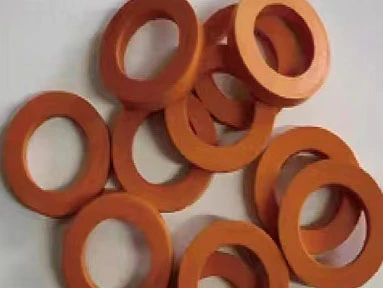
So if you’re tired of rubber parts that wear out too fast, don’t work as well as they should, or are costing you money in replacements, reach out and let’s chat. We can walk through what you’re making, what conditions your parts will be used in, and help you put together a natural rubber compound that’s perfect for your needs. No pressure, no confusing jargon, just real talk about making better rubber products. It’s the kind of partnership we’ve built with hundreds of customers over the years, and we’re excited to add you to the list.
Butyl Rubber References
- Rubber Chemistry and Technology, "Compounding of Natural Rubber," Vol. 94, No. 3, 2021
- The Natural Rubber Producer’s Guide to Compounding, International Rubber Study Group, 2020
- ASTM D1566, Standard Terminology Relating to Rubber, 2022 Edition
- Hevea brasiliensis: Properties and Applications, Rubber Research Institute of Malaysia, 2019
Wuhu Chaori Rubber and Plastic Technology Co., Ltd.
As one of the most professional natural rubber manufacturers and suppliers in China, we have world-leading production equipment and strong manufacturing capabilities. Please feel free to wholesale bulk durable natural rubber made in China here and get quotation from our factory. For price consultation, contact us.
Address: Qihang Road, Xinwu Economic Development Zone, Wanzhi District, Wuhu City, Anhui Province, P.R. China
E-mail: chaori2026@163.com
WebSite: https://www.chaorirubber.com/
